Pool of Peace, War memorial crater in Wijtschate, Belgium
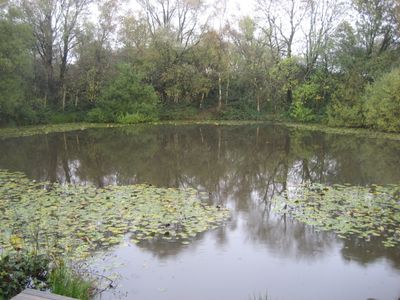
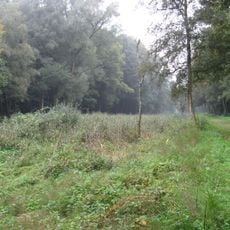
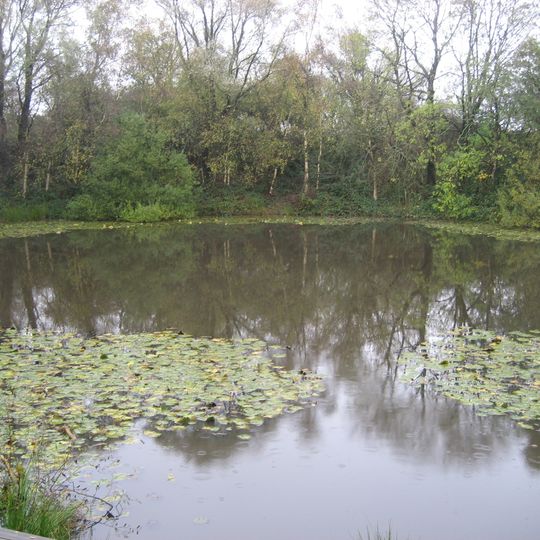
The Pool of Peace is a water-filled shell crater near Wijtschate, in the Belgian municipality of Heuvelland, left by a massive underground mine explosion in World War I. The crater is now a pond surrounded by trees and reeds, sitting in the middle of a flat, open farming landscape.
On June 7, 1917, British forces detonated 19 mines simultaneously under German lines to break through near Wijtschate, in what became known as the Battle of Messines. The crater left behind by one of those blasts was never filled in, and over the following decades it gradually filled with groundwater.
The name reflects the quiet water surface that developed over time, becoming a natural memorial space. Visitors experience a setting that speaks to loss and invites contemplation without need for formal structures.
The site sits along a marked cycling route through the flat countryside of Heuvelland and is easy to reach by bike or on foot. Several other World War I memorials and sites are within a short distance, making it natural to combine this stop with others nearby.
Of the 19 mines laid for the Battle of Messines, 2 did not go off on the day, and one of them is still buried, unexploded, somewhere beneath a nearby field. The Pool of Peace is one of the very few craters from that day that can still be visited, as most others were filled in or built over long ago.
The community of curious travelers
AroundUs brings together thousands of curated places, local tips, and hidden gems, enriched daily by 92,517 contributors worldwide.