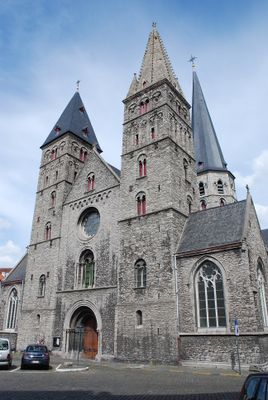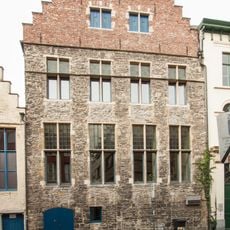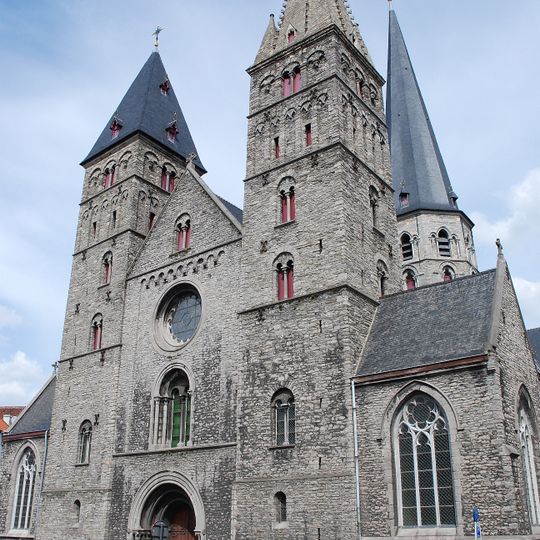
Sint-Jacobskerk, Romanesque church building in Ghent, Belgium.
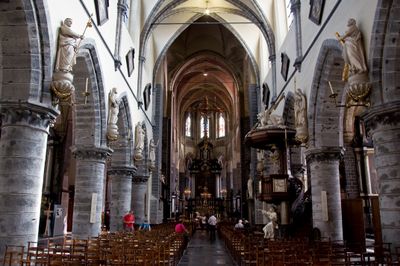
Sint-Jacobskerk is a Romanesque church in Ghent built mainly of Tournai limestone, with two square west towers and an octagonal crossing tower. The south tower's slate cap dates from the 15th century, while the north tower was rebuilt after a fire around 1400, leaving the facade asymmetrical. The interior is a three-aisled basilica with five bays, side chapels, and a five-sided choir with an ambulatory.
The church began as a wooden chapel in the 11th century and was rebuilt in stone during the 12th century as the surrounding neighborhood grew into one of the busiest trading areas in Ghent. Gothic elements were added in the 13th century, giving the building its current mix of Romanesque and Gothic forms.
The church is dedicated to James the Greater, and its name lives on in the square beside it, Bij Sint-Jacobs. In the north chapel, paintings by Gaspar de Crayer and his pupil Jan van Cleef recall the Trinitarian order, which ransomed Christians captured or sold as slaves during and after the Crusades. Since 2015 the CHURCH event has turned the building into a cultural and culinary meeting point during the ten days of the Ghent Festivities.
The church is open to visitors only on certain weekdays, so it is worth checking current hours before planning a visit. It sits in the heart of Ghent's old city center and is easy to reach on foot from the main square and nearby canals.
The church holds two tombs of the obstetrician Jan Palfijn, inventor of the forceps. The first, commissioned by the College of Medicine, was judged too modest for his standing, so a year later the city council erected a grander monument. Palfijn had been buried anonymously in the churchyard around the church some fifty years earlier.
The community of curious travelers
AroundUs brings together thousands of curated places, local tips, and hidden gems, enriched daily by 94,613 contributors worldwide.