Royal Crypt, Royal burial site in Laeken, Belgium
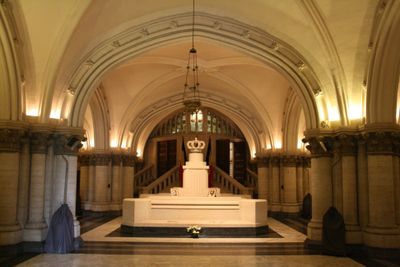
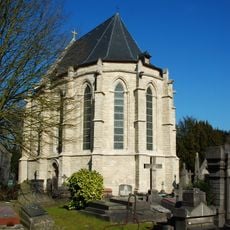
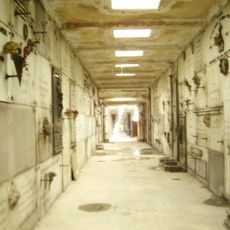
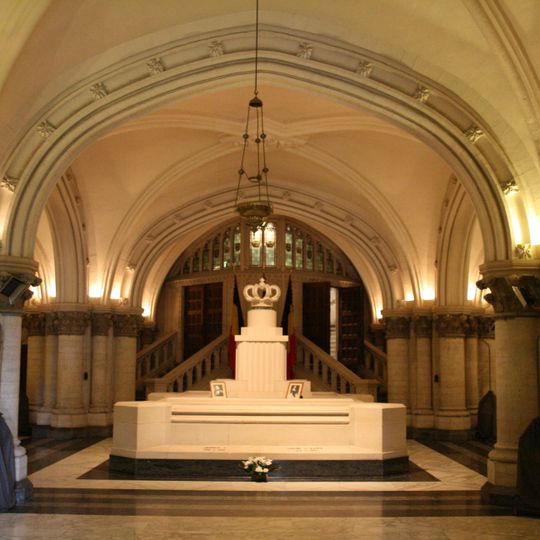
The Royal Crypt lies beneath the apse of the Church of Our Lady of Laeken, under an octagonal chapel. Its central space is dominated by the white marble tomb of Leopold I and Queen Louise-Marie, a broad square base with a column topped by a crown. Around it stand eight sarcophagi, four of them occupied, and marble altar alcoves hold younger members of the royal house.
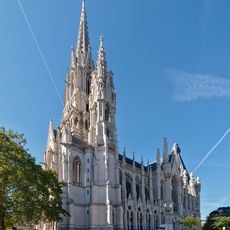
Construction of the church and crypt began in 1854 under King Leopold I, who established this place as a resting spot for his late wife Queen Louise-Marie. The underground complex later became the official burial site for all subsequent Belgian rulers.
The crypt is managed directly by the king, not the Belgian state, and the sovereign decides who is interred there. Visitors often leave flowers at King Baudouin's tomb, and an honour guard is always present. Above the bronze doors, mosaics show the nine coats of arms of the Belgian provinces.
The crypt is reached by two staircases on either side behind the high altar; at their foot, before the carved oak doors, a mosaic shows the nine coats of arms of the Belgian provinces. An honour guard is always present. Opening dates and hours are announced by the Grand Marshal of the Court, who can also grant exceptional access on request.
Emperor Maximilian's widow, Empress Charlotte, is interred here even though Habsburg house law required burial in Vienna. Crown Prince Louis-Philippe, who died in 1834, was moved into a side chapel only in 1993. Leopold III's tomb holds three bodies: the king, Queen Astrid and his second wife, Princess Lilian.
The community of curious travelers
AroundUs brings together thousands of curated places, local tips, and hidden gems, enriched daily by 93,556 contributors worldwide.