Hortus Botanicus Lovaniensis, Botanical garden and museum in Leuven, Belgium.
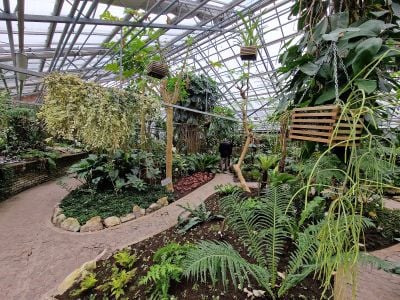
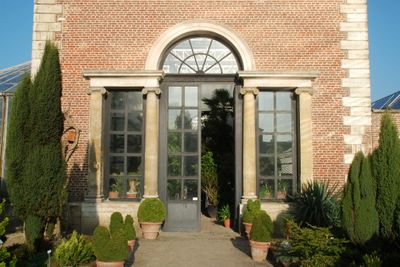
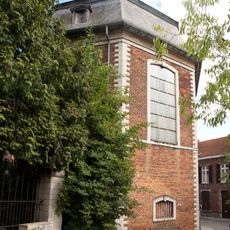
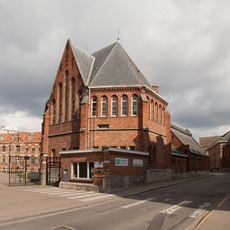
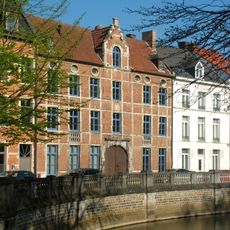
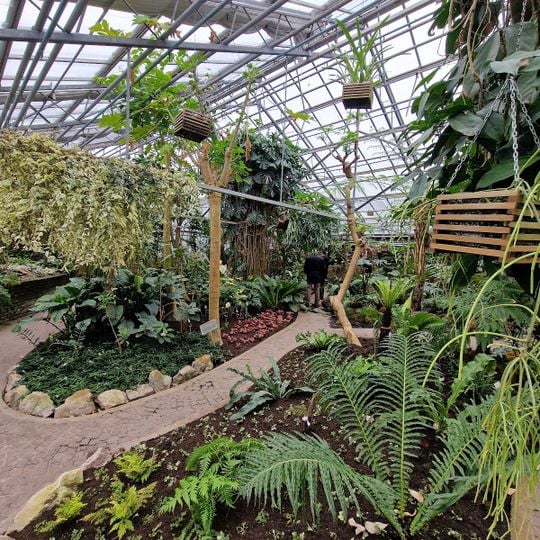
Hortus Botanicus Lovaniensis, known as the Kruidtuin, lies between the Kapucijnenvoer and Heilige Geeststraat in central Leuven and covers about 2.2 hectares. Its entrance building and orangery were designed by court architect Charles Vander Straeten; the orangery, ranked as a monument in 1976, now hosts exhibitions. A 450 m² greenhouse complex displays tropical and subtropical species alongside trees, shrubs, herbs and aquatic plants.
Henri-Joseph Rega, professor of medicine at the University of Leuven, laid out the first garden in 1738 between the Dijle and the Voer to supply medicinal herbs. The state seized it when the university closed in 1797. A new garden was created in the 1820s across the Kapucijnenvoer on the site of the former Capuchin monastery, designed by Guillaume Rosseels with an entrance building and orangery by Charles Vander Straeten. The city took it over in 1835.
The garden's name Kruidtuin means "herb garden", recalling its origin as a source of medicinal herbs for the university. Today the orangery, the gate building and the open grounds host regular exhibitions, sometimes of contemporary art. The city runs it as a free public park.
The garden is open year-round with extended hours during warmer months and shorter hours in winter. Comfortable walking shoes are useful as you will spend time on paths and inside greenhouses, which can be humid and warm indoors.
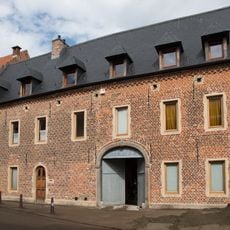
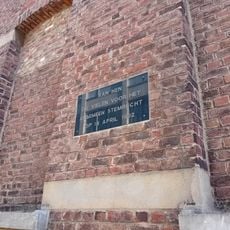
The 1771 classicist entrance gate designed by Laurent-Benoit Dewez still stands on Minderbroedersstraat, the site of the original 1738 garden. In 1874 a girls' school was built over that first garden, so the gate is the only remnant there; the present garden lies across the Kapucijnenvoer.
The community of curious travelers
AroundUs brings together thousands of curated places, local tips, and hidden gems, enriched daily by 94,538 contributors worldwide.