Abbaye de Saint-Denis-en-Broqueroie, Benedictine abbey in Mons, Belgium.
The Abbaye de Saint-Denis-en-Broqueroie is a Benedictine monastery in Mons situated along the Obrecheuil river with architectural elements spanning different periods. The complex combines religious spaces, residential buildings, and functional structures developed over several centuries.
Founded in 1081 by Countess Richilde of Hainaut and her son Count Baudouin II, the abbey grew from a priory first recorded in 886. Richilde placed it under the Benedictine rule and tied it to La Sauve-Majeure near Bordeaux. Fires in 1128 and 1136 destroyed the monastery, and the site was suppressed under the law of 1 September 1796.
The abbey's name comes from the Broqueroie land on the Obrecheuil, where a priory was recorded in 886. In 1142 a yearly fair was granted to the village for the patron saint's feast on 9 October. A carved limestone retable made in Hainaut between 1450 and 1460 was moved from the abbey church to the chapel of Beaulieu castle in Havré.
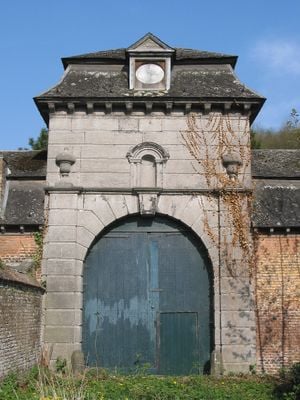
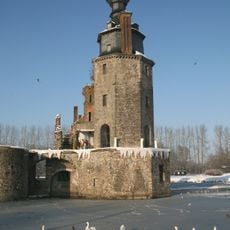
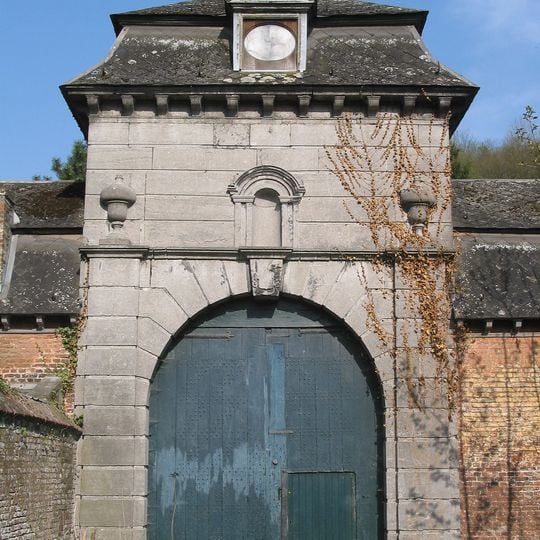
The 18-hectare estate was bought in 1978 by a housing cooperative that restored the surviving buildings, listed as monuments in 1980. The gatehouse, the 1683 tithe barn, the 1616 library gable and the dormitory facade stand along the Obrecheuil, 8 km north-east of Mons. The watermill with parts from 1711 and 1777, its 17th-century weir-bridge and the fish ponds also survive. Much of the site is now private housing.
Between 1804 and 1958 the monastic grounds operated as a cotton spinning mill, completely transforming its function. This industrial phase left traces still visible in some of the preserved structures today.
The community of curious travelers
AroundUs brings together thousands of curated places, local tips, and hidden gems, enriched daily by 94,072 contributors worldwide.