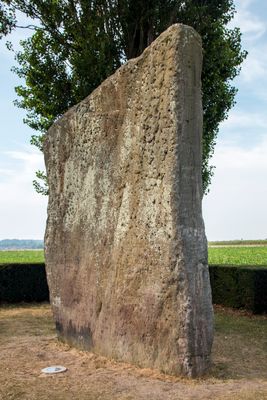
Pierre Brunehaut, Neolithic menhir in Hollain, Belgium.
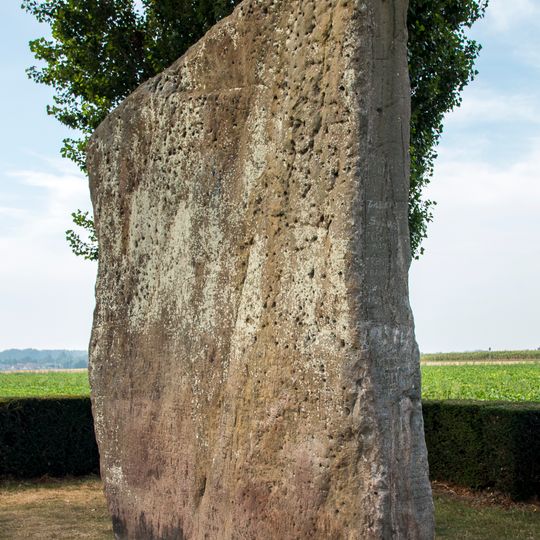
Pierre Brunehaut is a prehistoric menhir standing upright in a village in the Hainaut region. The sandstone structure features various markings on its surface, including small holes and what may be ancient carved marks.
The menhir is mentioned as early as 1619. In 1773 it leaned at 50°, by 1811 at 34° and by 1819 at 20°; earthworks for a planned reuse as a lock stone at Bléharies on the Scheldt increased the tilt. In 1819 Hollain voted 500 francs to straighten and consolidate it with a base slab and two buttresses. It has been classified since 15 March 1934.
Local legends give the stone several origins: it is said to mark where Queen Brunhild died, though she was executed at Renève, or to have been carried by Jesus, who left a footprint on its west face. Another tale says the stone was meant for Tournai Cathedral but returned to Hollain by itself.
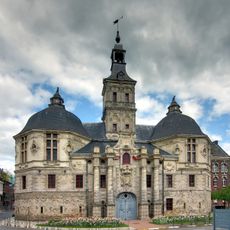
The menhir sits on an elevated plateau offering clear views of the surrounding village and its landmarks. When visiting, expect open ground and simple access from nearby roads.
In 1819 Hollain council voted 500 francs to straighten the stone, adding a base slab and two buttresses. The tilt had worsened because earthworks were dug when Napoleon's administration planned to move it to Bléharies as a lock stone on the Scheldt. The move never happened.
The community of curious travelers
AroundUs brings together thousands of curated places, local tips, and hidden gems, enriched daily by 94,611 contributors worldwide.