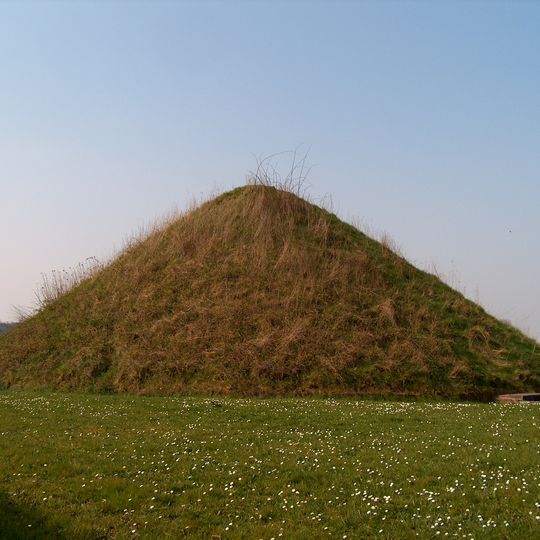
Tumulus of Trou de Billemont, Ancient burial mound in Antoing, Belgium.
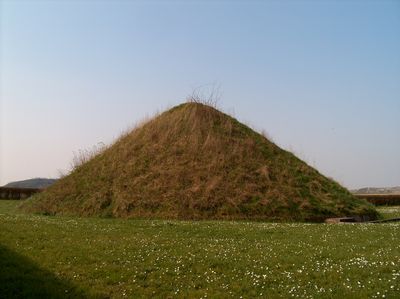
The Tumulus of Trou de Billemont is a large earthen mound that rises from the landscape of Antoing and dates to the first or second century. It spans about 23 meters across and reaches about 9 meters high, with a stone drum foundation and a T-shaped internal corridor that leads to a burial chamber with small niches.
The mound was built during the first two centuries after Christ as a burial site for a member of the Roman elite. Archaeological work in 1624 and 1640 revealed its internal structure and documented the distinctive T-shaped design.
Archaeological excavations in 1624 and 1640 documented the internal structure, with plans preserved in the Municipal Library of Besançon.
The site is accessible during daylight hours and has informational panels to help you understand its archaeological features. Wear sturdy footwear and take care on damp days, as the steep slopes can be slippery.
This is the westernmost large tumulus in Belgium and sits at a significant crossroads along ancient routes that passed through this region. The fact that this mound survived at all makes it a rare remnant of this type of Roman burial practice in Western Europe.
The community of curious travelers
AroundUs brings together thousands of curated places, local tips, and hidden gems, enriched daily by 92,642 contributors worldwide.