Farciennes Castle, Protected heritage castle in Farciennes, Belgium.
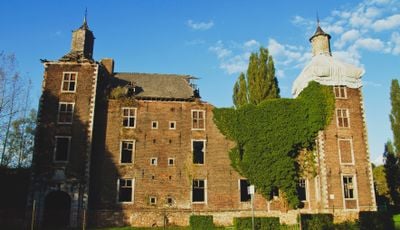
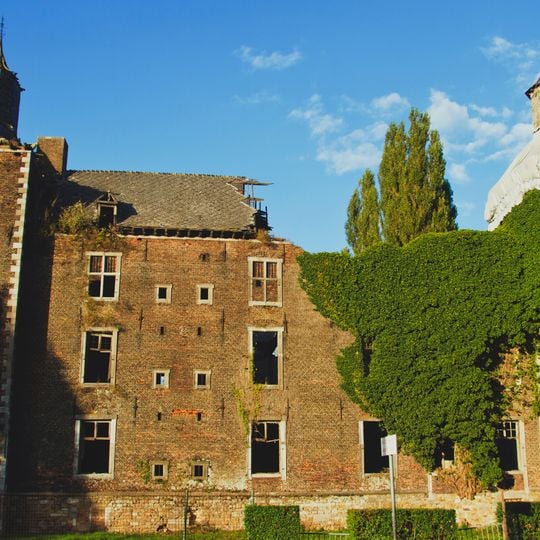
Farciennes Castle is a ruined 17th-century Mosan-style residence built on an artificial mound beside the Sambre. Its walls are of brick with blue-stone window surrounds and quoins, and the edges of three square towers are still visible. A metal frame stabilises the remains, which are covered with tarpaulins.
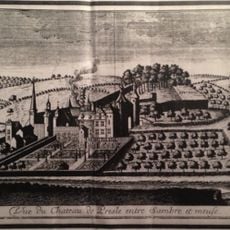
Charles Albert de Longueval commissioned this aristocratic residence in 1630, built over the remains of a demolished 14th-century fortress. The building served as a private home for two centuries before its conversion into an industrial facility in 1837, which accelerated its decline.
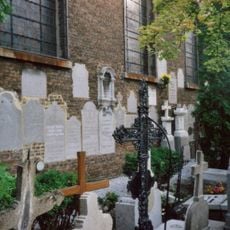
The castle's name comes from the seigniory of Farciennes, an enclave tied to the prince-bishopric of Liège on the left bank of the Sambre, which marked the border with the County of Hainaut. In 1851, when the 17th-century Saint-Jacques chapel at Tergnée was demolished, five 18th-century coffins of the Bathyani family were exhumed, including that of Count Charles Bathyani, lord of Farciennes, and his wife Anne de Waldstein, each pierced through the chest by a large nail.
The castle is visible from the street in the town center and easily accessible for viewing from outside, though entry to the interior is restricted by protective barriers. Visiting during daylight hours provides the best view of the tower details and wall structures.
The castle's decline was worsened by coal mining beneath it: subsidence cracked the walls, and in 1860 it became a farm, with cows and pigs housed in the former ballrooms. The town of Farciennes bought the remaining structure in 2008.
The community of curious travelers
AroundUs brings together thousands of curated places, local tips, and hidden gems, enriched daily by 94,387 contributors worldwide.