De Holsteen, Prehistoric sandstone formation in Zonhoven, Belgium
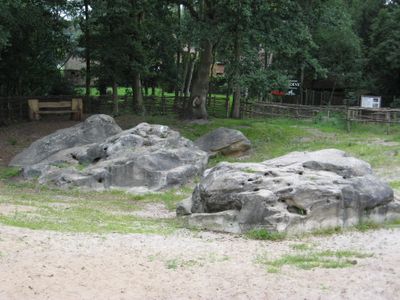
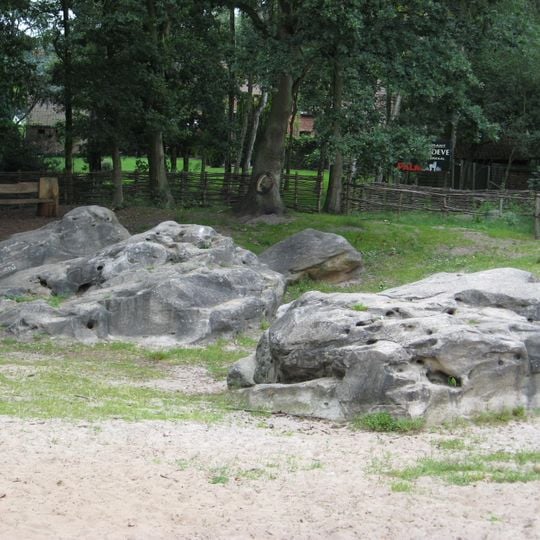
De Holsteen is a group of eight large Miocene sandstone blocks in Zonhoven, with irregular holes and pitted surfaces. The northernmost stone also has grooves and a polished area. The blocks lie on flat sandy ground with sparse grass; one large mass has a deep hollow in its lower face.
The site was discovered in 1862 and gained protected status in 1967, triggering major research efforts. Archaeological study showed that the northernmost stone served as a grinding surface where Neolithic people shaped their hunting tools and implements.
The name comes from the Dutch word for stone and reflects how important this rock formation was to people over thousands of years. Visitors can still see the marks and grooves left by prehistoric hands working on the surface.
The site is located along Holsteenweg and features information panels and benches for visitors to rest and observe. The grounds are easily accessible and provide clear views to examine the stone formations up close.
The stone surface bears roughly 51 distinct grooves and grinding marks created by human activity over thousands of years. It stands as the only documented fixed prehistoric grinding stone found in Flanders, making it exceptionally valuable for understanding how ancient people worked.
The community of curious travelers
AroundUs brings together thousands of curated places, local tips, and hidden gems, enriched daily by 93,583 contributors worldwide.