Baggaertshof, Historical housing complex in Kortrijk, Belgium
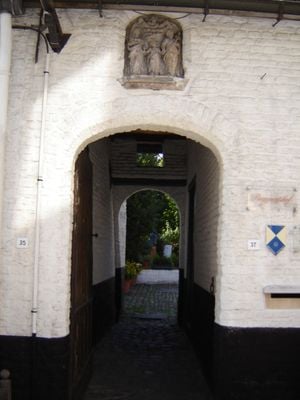
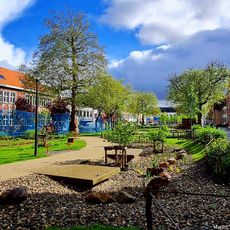
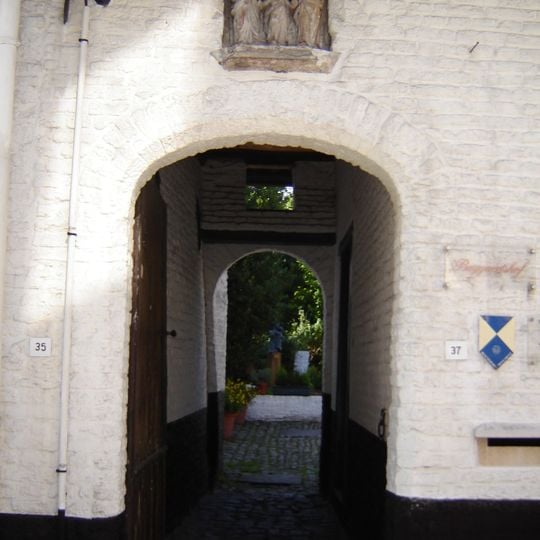
Baggaertshof is a walled complex in Kortrijk's Overbeke district, made up of thirteen small houses and a chapel set around a rectangular inner courtyard. The white-painted brick entrance has a large rounded archway with a recessed relief above it, and the courtyard holds a medicinal herb garden with more than 300 species.
Josijne Baggaert, daughter of the Kortrijk weaver-merchant and alderman Willem Baggaert, founded the hof in 1638 with thirteen houses for poor women. By deed of 7 September 1643 she gave the houses, chapel and garden to the city magistrate, keeping usufruct for herself and her sisters Catharina and Wilhelmina. The Jesuit rector Jacobus Rasseghem co-wrote its rules; the OCMW has managed it since an 1884 royal decree.
The compound was first called 't Olmeke or the Saint Joseph houses, after the miraculous Our Lady statue brought from the Ten Olme chapel; a painting in the chapel recalls the miracle. Residents were required to gather there each evening for night prayer and to thank the benefactors, and in summer to be home early to ring the great bell.
You can walk through the courtyard and garden at your own pace, and the rectangular layout makes it easy to see everything without getting lost. Take time to move slowly through the space so you can notice the details of the buildings and plants.
The medicinal garden was laid out in 1981 on the initiative of the Werkgroep Kruiden Medici, and now holds over 300 different healing herbs. The courtyard also kept a pump and a toilet for the residents, and the houses stayed lived in until about 1970.
The community of curious travelers
AroundUs brings together thousands of curated places, local tips, and hidden gems, enriched daily by 94,133 contributors worldwide.