The Whirling Ear, Public sculpture at Mont des Arts, Brussels, Belgium
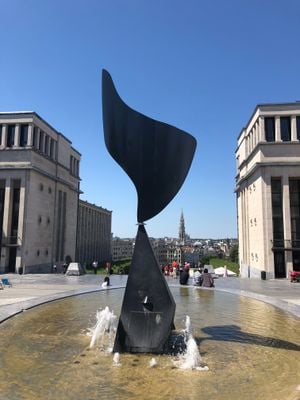
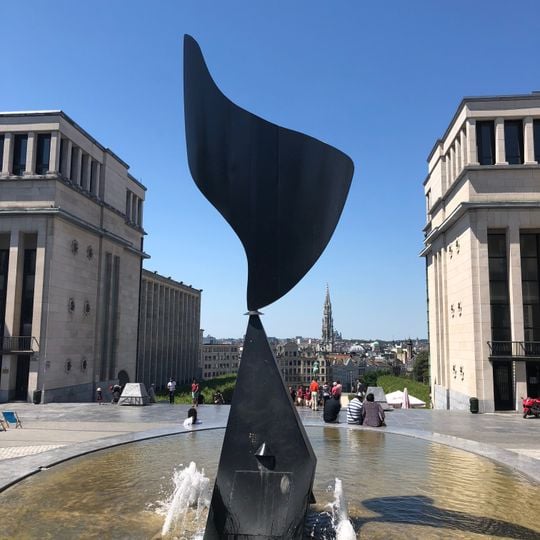
The Whirling Ear is a 6.3-metre painted metal sculpture by Alexander Calder, made of a steel base and welded aluminium sheets. Its upper part is a broad, curved, asymmetrical form with a concave face and a raised rim, narrowing to a four-sided tapered spike that points down into a shallow pool. A small circular opening sits on the lower section's front face.
The artwork was created by Alexander Calder for the 1958 Brussels World's Fair and symbolized the cultural bridge between East and West. It originally stood between the United States and Soviet Union pavilions at the exhibition.
The sculpture gets its name from its swirling spiral shape that resembles a spinning ear. It sits in a central location where people pass by and interact with it daily, showing how art shapes the way we experience public spaces.
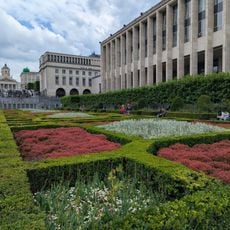
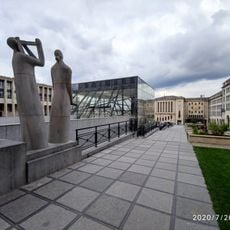
The sculpture stands at the top of the Mont des Arts staircase, on rue Montagne de la Cour between the Mont des Arts and the Place Royale. It is freely accessible at any time. The surrounding area is paved and sloping, with steps nearby, so visitors should watch their footing when approaching the basin.
Calder's proposal was only a handwritten note and a 27 cm wooden model; the Gowan & Knight Co. workshop in Watertown built the work twenty-four times larger, with a steel base and welded aluminium sheets for the rotating part. It is Calder's only monumental piece made for a Belgian site.
The community of curious travelers
AroundUs brings together thousands of curated places, local tips, and hidden gems, enriched daily by 93,457 contributors worldwide.