Palace of Charles of Lorraine, 18th century palace in Royal Quarter, Belgium
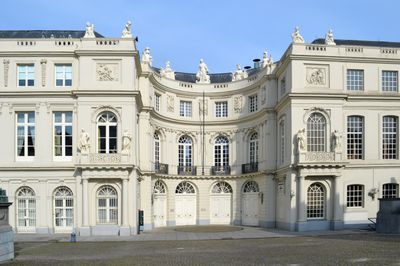
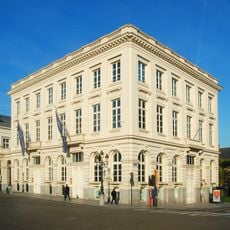
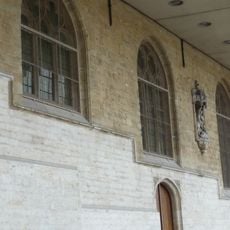
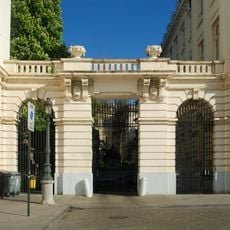
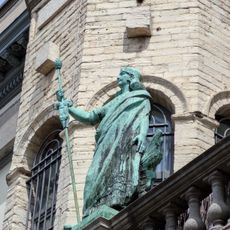
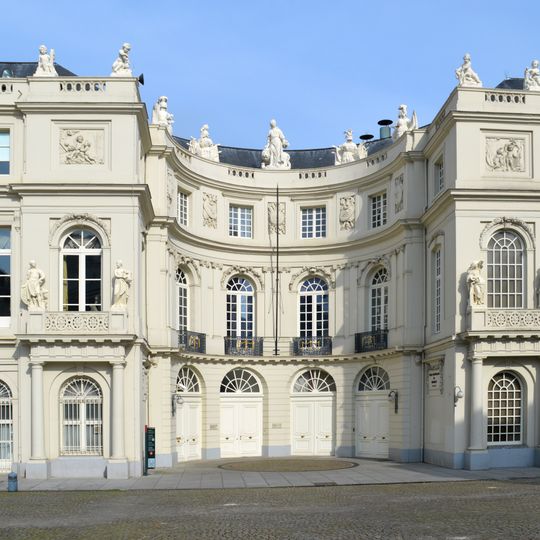
The Palace of Charles of Lorraine is a neoclassical palace on the Place du Musée in Brussels. Its cream stone facade has a concave central section between two projecting wings, five round-arched doorways with fanlights, tall arched windows with small balconies, and a roofline of white statues. Inside, five halls with stucco and silk decoration survive, and a staircase with a Hercules statue by Laurent Delvaux leads to a first-floor rotunda.
This residence was built in 1757 on the former site of the Nassau Palace and served as the home of Charles Alexander of Lorraine, Governor of the Habsburg Netherlands. The construction took place during the Enlightenment, a period when this region held significant political and cultural importance.
The palace's name comes from Charles Alexander of Lorraine, governor of the Austrian Netherlands from 1744 to 1780, who bought the old Orange-Nassau residence in 1756. The five surviving salons, decorated in stucco and silk, recall the Austrian Netherlands and the Prince-Bishopric of Liège. The interior mixed classical and rocaille influences, unlike the classical facades.
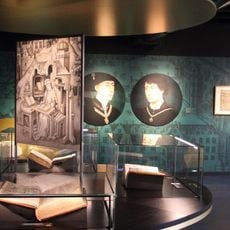
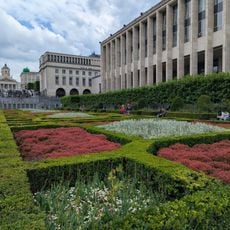
The palace stands on the Place du Musée/Museumplein, a short walk from the Place Royale/Koningsplein and the Mont des Arts/Kunstberg. Only part of the original building survives, so the entrance is through the remaining wing rather than a full courtyard. It reopened in 2019 after closing for renovations in 2017, and now holds the museum of 18th-century items and the Royal Library's temporary exhibitions.
The rotunda's floor holds a central rosette made of 28 kinds of Belgian marble, a sample drawn from Charles Alexander's own collection of 5,000 minerals. The staircase leading up to it carries a statue of Hercules carved by the Flemish sculptor Laurent Delvaux.
The community of curious travelers
AroundUs brings together thousands of curated places, local tips, and hidden gems, enriched daily by 94,103 contributors worldwide.