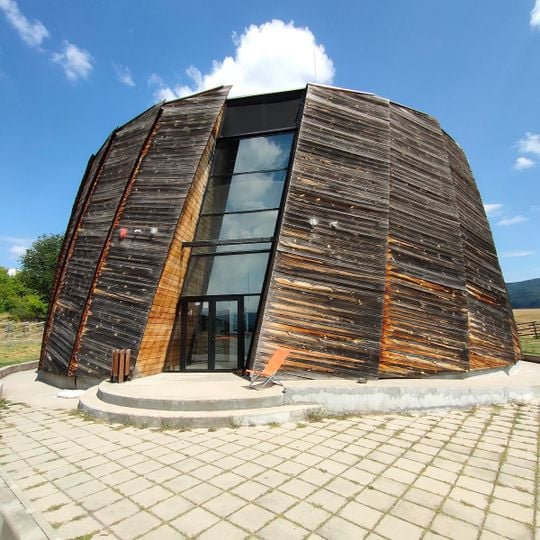
Dorkovo Museum, Paleontological museum in Dorkovo, Bulgaria
Dorkovo Museum is a paleontological museum located in a small Bulgarian village and displays fossil remains of over 30 prehistoric animal species discovered at one of the region's largest excavation sites. The collection holds more than 600 bone specimens that have survived through the ages.
Fossils of Pliocene mammals, about five million years old, were first noticed by the local teacher Manol Cholev in the 1930s and rediscovered in the early 1980s by geologists of the Red Metals company. Bulgarian-French excavations organised by the National Museum of Natural History in Sofia and the Paris museum ran from 1985 to 1987 under Herbert Thomas, and the site was declared a natural landmark on 31 January 1990. The museum opened on 19 September 2013, inaugurated by President Rosen Plevneliev.
The central exhibition hall features a 3.9-meter-high sculpture of an Anancus arvernensis mastodon, created by sculptors Ivailo Avramov and Teodor Nanev.
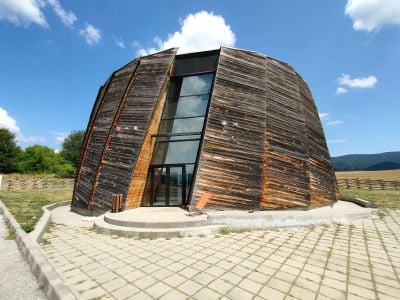
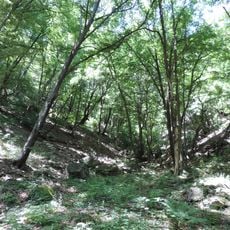
The museum stands in the village of Dorkovo, Rakitovo Municipality, in the Pazardzhik region, 150 km from Sofia on the road between Velingrad and the Batak Reservoir, set among forest. The domed hall covers 300 m², with the mastodon model and diorama inside; the building is wooden inside and out.
The diorama on the museum's interior wooden walls is 6 metres long, painted by Velizar Simeonovski of the Field Museum in Chicago, and shows proboscideans, monkeys and Hipparion horses in Pliocene forests. Beside the 3.9-metre Anancus arvernensis model stands a giant tusk of Mammut borsoni found in a sand quarry at General Inzovo, Yambol region, restored by Georgi Iliev of the Yambol regional history museum.
The community of curious travelers
AroundUs brings together thousands of curated places, local tips, and hidden gems, enriched daily by 94,106 contributors worldwide.