Etnographic museum, Etnographic museum in Burgas, Bulgaria
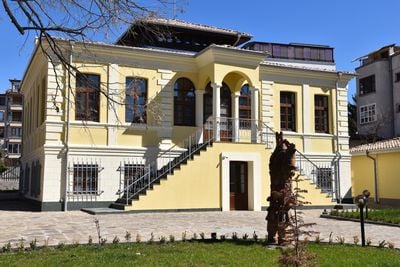
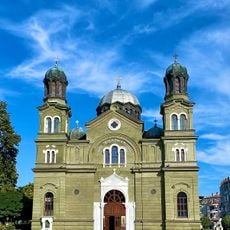
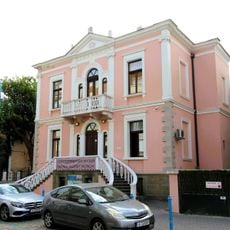
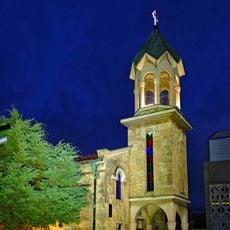
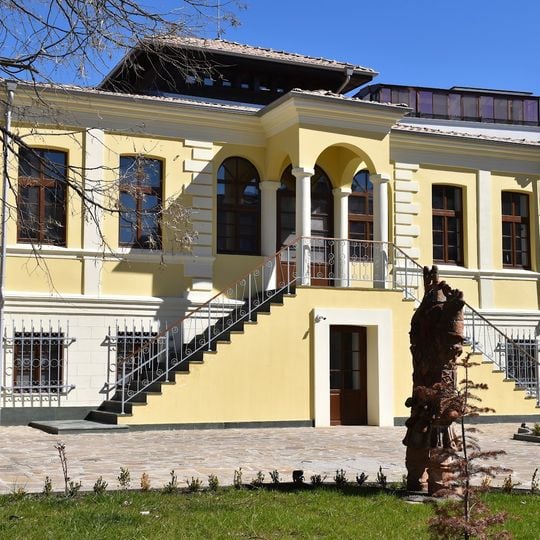
The Ethnographic Museum in Burgas occupies the two-storey Brakalova House, built in 1873 for mayor Dimitar Brakalov behind the Cathedral of St. Cyril and Methodius. The floors are linked by an internal spiral wooden staircase that continues up to a veranda above the roof. The first floor shows 19th-century weaving and urban domestic life; the second holds traditional costumes of the region's ethnographic groups.
The Brakalova House was built in 1873 for Dimitar Brakalov, a lawyer, public figure and mayor of Burgas. The two-storey, symmetrical house has an internal spiral wooden staircase that continues up to a veranda above the roof. It now houses the ethnographic exposition of the Regional Historical Museum – Burgas.
The second floor holds costumes of the ethnographic groups of the Burgas region — Rupci, Tronki, Zagorci, Planinci, Aliani and settlers from present-day Greece and Turkey. Ritual outfits and jewellery from the 19th century are shown, among them the nestinarka, Enyova bulya, lazaraka and Karakachan bride, plus authentic wedding dress from the village of Zidarovo.
The museum occupies the two-storey Brakalova House in central Burgas, just behind the Cathedral of St. Cyril and Methodius. The two floors are linked by an internal spiral wooden staircase that continues up to a veranda above the roof. The foyer area is used for temporary exhibitions, so part of the ground floor may change between visits.
The vertical loom used for weaving popraz belts, straps for pack animals, survives only among Bulgarians in the Strandzha mountains and is shown in its original form as a prototype of the vertical loom. The exhibits also include gaitan cords from the Pomorie, Grudovo and Karnobat areas.
The community of curious travelers
AroundUs brings together thousands of curated places, local tips, and hidden gems, enriched daily by 94,930 contributors worldwide.