National Museum of Bermuda, Maritime history museum in Royal Naval Dockyard, Bermuda
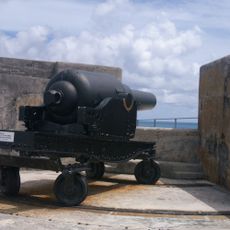
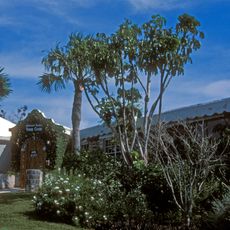
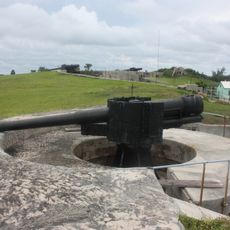
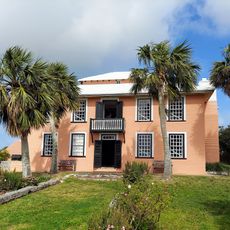
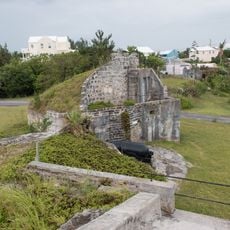
The National Museum of Bermuda occupies the 10-acre Keep of the former Royal Naval Dockyard on Ireland Island, a fortress with bastions A to G, ramparts and casemates. Its buildings, erected with local limestone, include the 1837 Shifting House, the 1850 Ordnance Building and the Commissioner's House, a prefabricated cast-iron structure of the 1820s.
Construction of the Royal Naval Dockyard began in 1809 and lasted about a century, with the Keep built of local limestone by slaves, then convicts and labourers brought from the West Indies. The dockyard closed in the late 1950s and its buildings decayed until the Bermuda Maritime Museum took over the Keep in 1974 and restoration began. It was renamed the National Museum of Bermuda in 2009, formalised by an amendment to the museum's Act in 2013.
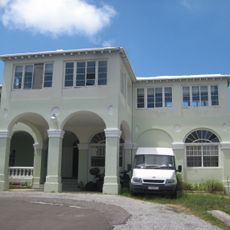
The Commissioner's House holds a two-storey History of Bermuda mural by Bermudian artist Graham Foster in its pillared hall. The main floor covers slavery, immigration and tourism, one room is dedicated to the Bermuda Race, and the upper floor keeps maps, books, coins and maritime art.
The Keep covers 10 acres, with bastions A to G, ramparts and casemates linked by paths; the Commissioner's House stands at its centre. The Keep Pond, once used to move ammunition from anchored ships, now holds Dolphin Quest. Some buildings were under renovation in 2009, so check which are open before crossing the grounds.
The Commissioner's House, at the centre of the Keep, was built in the 1820s to Edward Holl's design as the world's first residence with a prefabricated cast-iron structural frame. The 1850 Ordnance Building, which stored 4,860 kegs of gunpowder on non-sparking bitumen, appeared as the fictional Hamilton Library in the 1977 film The Deep.
The community of curious travelers
AroundUs brings together thousands of curated places, local tips, and hidden gems, enriched daily by 93,802 contributors worldwide.