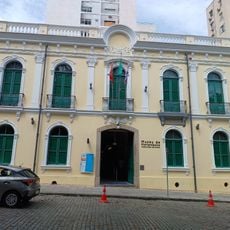
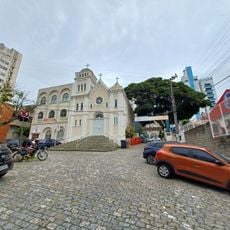
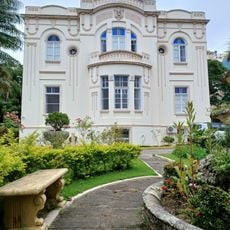
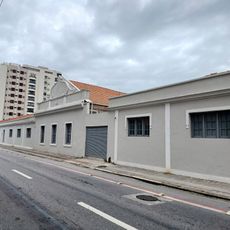
Museu Homem do Sambaqui, Archaeological museum in Florianópolis, Brazil.
Museu Homem do Sambaqui is an archaeological museum in Florianópolis dedicated to the prehistoric inhabitants of Santa Catarina. The collection holds stone tools, pottery fragments, human remains, and animal bones recovered from ancient settlement sites across the region.
The museum began with a collection bought from the Florianópolis merchant Carlos Behrenheuser. In 1963 it was called "Museu do Homem Americano"; at its reopening in 1964 it took the name "Museu do Homem do Sambaqui" and added "Padre João Alfredo Rohr, S.J.".
The name sambaqui comes from Tupi and means "mound of shells". These deposits of organic material and limestone were built up along the Santa Catarina coast; some indigenous groups buried their dead in them, others built their malocas on them. The museum holds about 80,000 fragments and some Guarani ceramic vessels.
The museum occupies part of the Colégio Catarinense, a Jesuit school in central Florianópolis. Access is through the school, so visits depend on its opening to the public; confirm entry conditions with the school before going. The collection is spread across rooms, including a zoology wing with taxidermied animals.
The museum also displays a collection of taxidermied animals and fossils that are far older than the archaeological finds on view. This combination makes it a place where visitors can trace the natural history of the region across vastly different time periods.
The community of curious travelers
AroundUs brings together thousands of curated places, local tips, and hidden gems, enriched daily by 93,846 contributors worldwide.