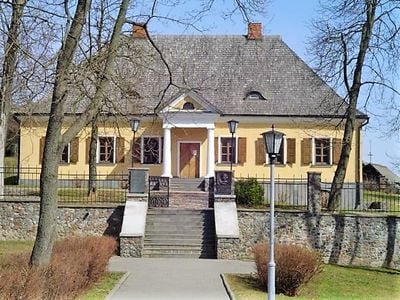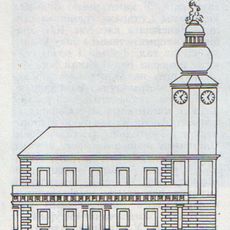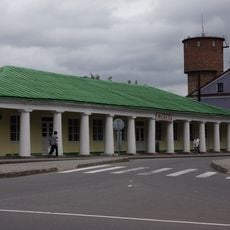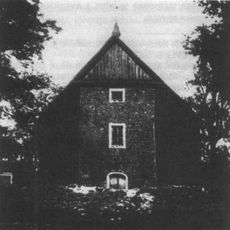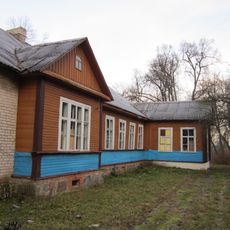
Adam Mickiewicz museum, Literary museum in Navahrudak, Belarus.
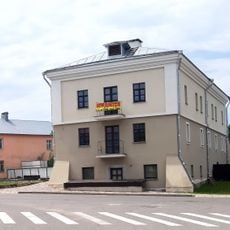
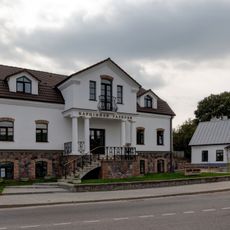
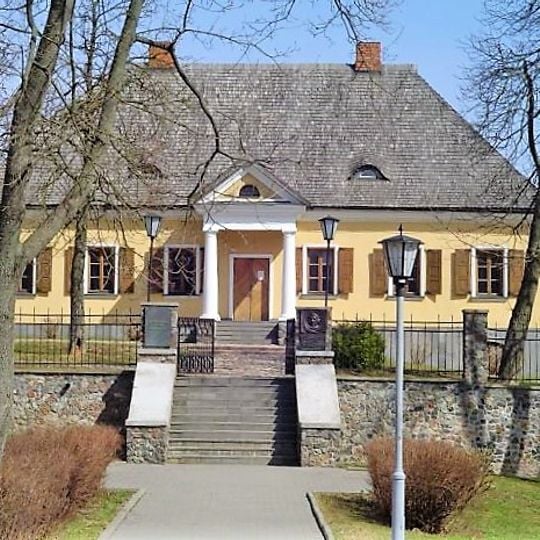
The Adam Mickiewicz Museum is housed in a two-story white building and displays personal belongings, manuscripts, photographs, and documents from the early life of the celebrated Polish poet. The collection also includes period furniture that provides insight into his world before his studies at Vilnius University.
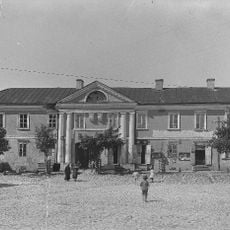
Mikołaj Mickiewicz bought the plot in 1803 and built a wooden house, replaced after the 1806–1807 fire by a brick house, rare in Navahrudak at the time. After his father's death in 1812 the family moved to the outbuilding; in 1833 the house was confiscated for Franciszek Mickiewicz's part in the 1830–1831 uprising. The museum opened on 11 September 1938, was damaged by a German bomb in June 1941, and reopened on 26 November 1955 for the poet's centenary.
The poet grew up in a multilingual town where Lithuanians, Poles, Belarusians, and Jews lived together. This diverse setting shaped his literary voice and is reflected through the exhibits displayed inside.
The museum occupies a 0.47-hectare estate with 659 m² of buildings, including 215 m² of exhibition space and a 90 m² gallery. Tours are given in Polish, Russian, Belarusian, English and German. The five exhibition halls and gallery are reached from the reconstructed manor, whose outbuilding is linked to the main house by an underground passage.
The museum keeps a bronze model of the Paris monument to Mickiewicz, made by sculptor Antoine Bourdelle between 1909 and 1929 and bought from his widow in 1937 by the Mickiewicz Committee. It survived the wartime losses that carried most of the poet's memorabilia to Poland in 1945.
The community of curious travelers
AroundUs brings together thousands of curated places, local tips, and hidden gems, enriched daily by 94,608 contributors worldwide.