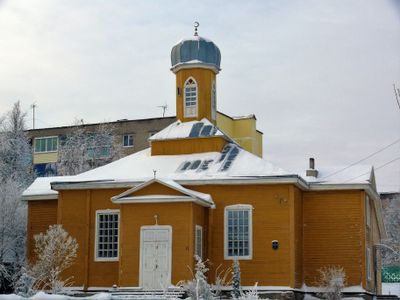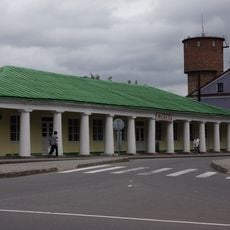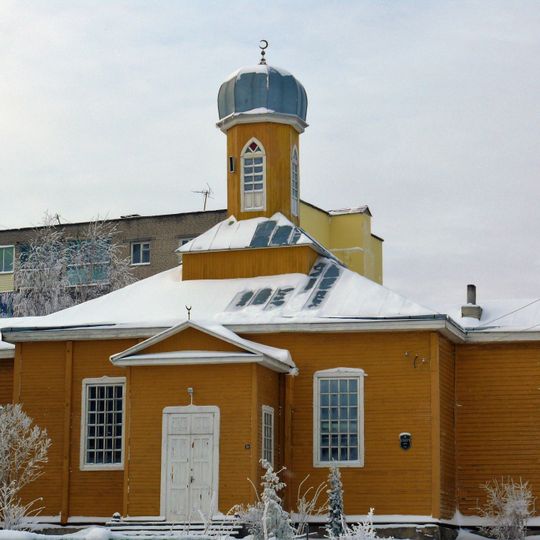
Mosque in Navahrudak, Sunni Mosque in Navahrudak, Belarus.
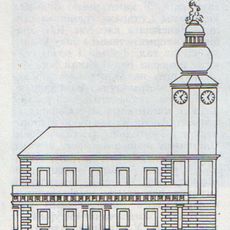
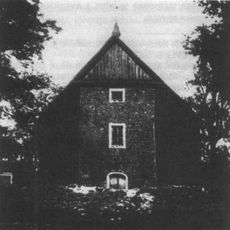
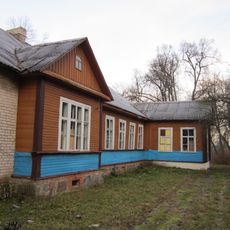
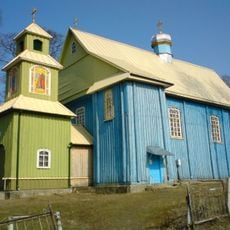
The Mosque in Navahrudak is a square wooden building with a mihrab covered by a hipped roof; a minaret topped with a cupola rises from the centre of the mihrab, following 16th–17th-century models of Asia Minor and Iran. The interior is divided into men's and women's halves with separate entrances; the men's side holds the mihrab and a minbar reached by a railed staircase. Walls are sheathed in boards, and the white-painted window and door frames stand out.
The mosque is first documented in the 16th century. In 1792 King Stanisław August Poniatowski granted the local Tatars a privilege to build a mosque, erected in 1796. The present building was funded by retired major Aleksander Assanowicz and opened in 1855. Closed in 1948 and converted into housing, it was returned to believers in 1994 and reopened on 11 July 1997.
The mosque represents the enduring presence of Lipka Tatars in Belarus, showing how they maintained Islamic traditions while becoming part of local society. Today it functions as an active prayer space used by the Muslim community.
The mosque stands at 28 Lenina Street, on the corner of Tatarska Street, in the centre of Navahrudak. The prayer hall is divided into separate men's and women's halves with their own entrances, so visitors use the door matching their section. The building is a listed architectural monument and can be viewed from outside at any time.
The 1855 mosque was funded by retired major Aleksander Assanowicz, who petitioned the authorities two years earlier together with the mosque's khatib A. Bogdanowicz. A religious school, a mekteb, operated at the mosque until 1939. The Soviet authorities removed the minaret and tower when they converted the building into housing after 1945.
The community of curious travelers
AroundUs brings together thousands of curated places, local tips, and hidden gems, enriched daily by 94,473 contributors worldwide.