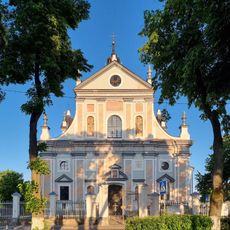
Sluck Gate in Niasviž, Baroque gate in Niasviž, Belarus
The Sluck Gate in Niasviž is a two-tier rectangular brick building with a central arched passage, built in the 16th century and rebuilt in 1690. Its walls are reinforced with buttresses, and it is covered by a two-row tiled roof. Both facades end in curving pediments; the upper tier held a chapel that opened through a large window with a balcony toward the town.
The gate was built in the 16th century as part of Niasviž's town ramparts on the road to Sluck, and was destroyed during the wars of the 17th century. It was rebuilt on the old site in 1690 and altered again in 1700 or 1760. The town wall itself was dismantled in the mid-18th century, leaving the gate as the only surviving entry of this kind.
The gate's name comes from the Sluck road it guarded, and its second floor held a chapel of the Mother of God, funded by Niasviž townspeople in 1700 and renewed in 1788 by Prince Karol Radziwiłł. A revered image of the Virgin and Child in a silver setting stood there. The chapel was closed after the 1863 uprising and reopened only in 1900.
The gate stands on the dam road between the New Town and the Old Town, on the shore of the lake formed by the dam. It is the only surviving gate through which one could drive into Niasviž, so it is passed on foot along the Sluck tract. The chapel on the upper tier opens through a large window opening with a balcony facing the town.
The chapel on the upper floor was funded by Niasviž townspeople in 1700 and renovated in 1788 by Prince Karol Radziwiłł. It held a venerated image of the Virgin Mary with the Infant Jesus in a silver riza, and after the 1863 uprising it stood abandoned until 1900.
The community of curious travelers
AroundUs brings together thousands of curated places, local tips, and hidden gems, enriched daily by 94,857 contributors worldwide.