Shchomyslitskaya grove, Botanical garden and natural monument in Ščomyslica, Belarus
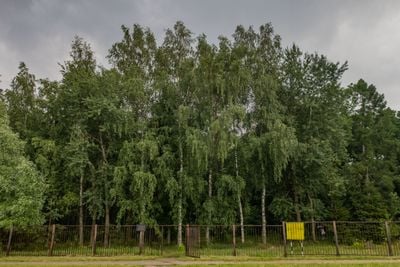
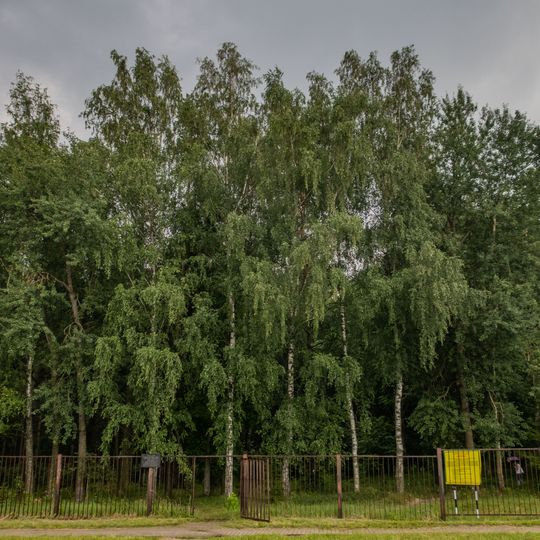
Shchomyslitskaya grove is a 240-metre-high, gently undulating oak woodland immediately north of Ščomyslica and bordering Minsk. Its canopy is dominated by pedunculate oak (Quercus robur) and Norway spruce (Picea abies), with trees averaging about 150 years old. The grove also holds around 80 introduced species, including Manchurian and grey walnut and red oak, planted in the 1920s and 1930s.
In 1925, on the initiative of Nikolai Vavilov, the Belarusian branch of the All-Union Institute of Applied Botany and New Crops was created, and its dendrology section under I. I. Sobolev was formed on the basis of a small oak grove. Between 1928 and 1936 many rare trees and shrubs, including about 80 exotic species, were planted there for research. On 24 March 1986 the grove was organized as the nature monument "Dubrava", and on 22 July 1986 it was transferred to Belarusian State University. In 1989, after public pressure, planned construction of an artesian well and nearby facilities was halted.
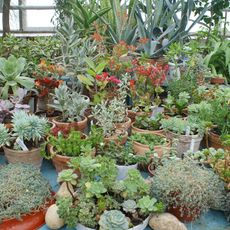
The grove is named for the oak (Quercus robur) that dominates it, with trees of a median age of about 150 years. It forms part of the botanical garden of the Belarusian State University's biology faculty, whose grounds lie across the road, and serves as a teaching dendropark. Among the plantings made in 1928–1936 are about 80 exotic species, including 45 trees, 36 shrubs and one woody liana.
The grove lies just north of Ščomyslica and borders Minsk, across the road from the BGSU Faculty of Biology botanical garden, of which it is part. Its flat relief rises to about 240 m, with relative heights of no more than 5–10 m. In spring and summer the ground is often waterlogged because the soil drains poorly and roads block the natural runoff, so waterproof footwear helps.
A lichenicolous fungus, Xanthoriicola physciae, was first recorded in Belarus in this grove. The grove also holds about 80 introduced species planted from 1928 to 1936, including Manchurian and grey walnut and red oak, which now regenerate on their own.
The community of curious travelers
AroundUs brings together thousands of curated places, local tips, and hidden gems, enriched daily by 94,426 contributors worldwide.