Manicouagan Reservoir

Log in to your account

AroundUs is a community-driven map of interesting places, built by curious explorers like you. It grows with every review, story, and photo you share.
Connect to save your favorite spots, contribute locations, and create personalized routes.
By continuing, you accept our Terms and Conditions and our Privacy Policy
Add to collection
Map
Suggest a change
Share

Manicouagan Reservoir, Circular reservoir in Quebec, Canada.

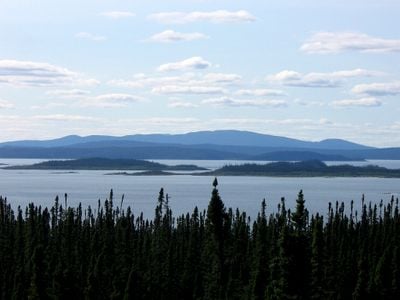
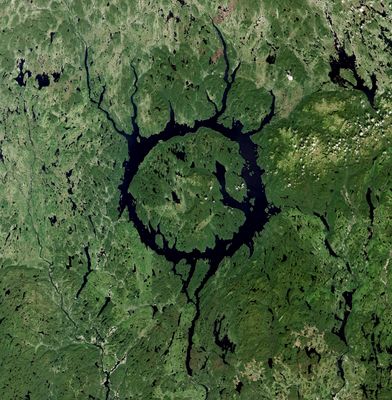
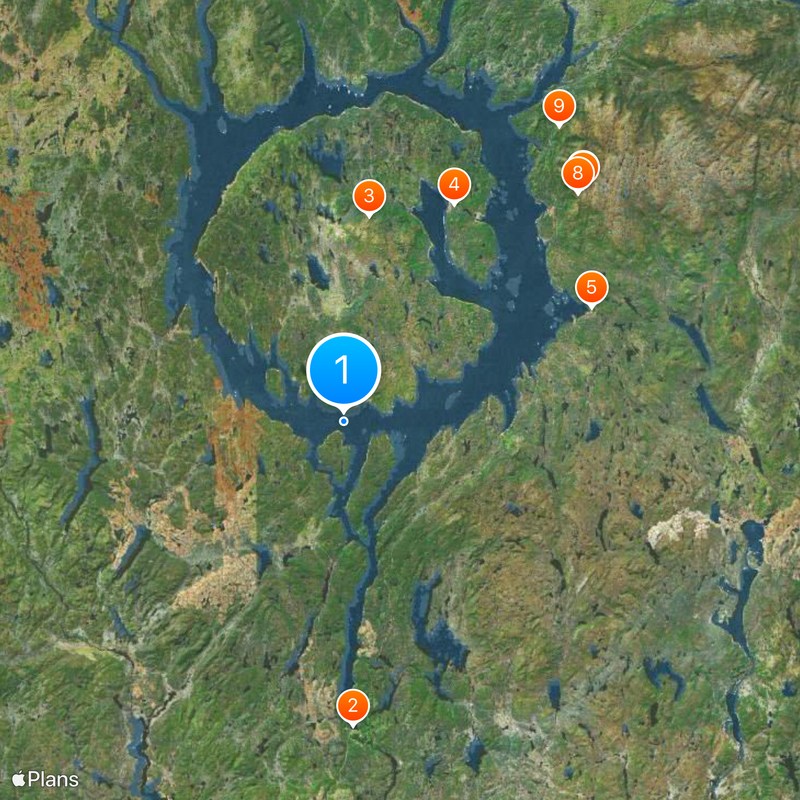
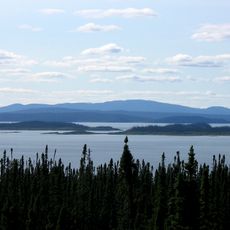
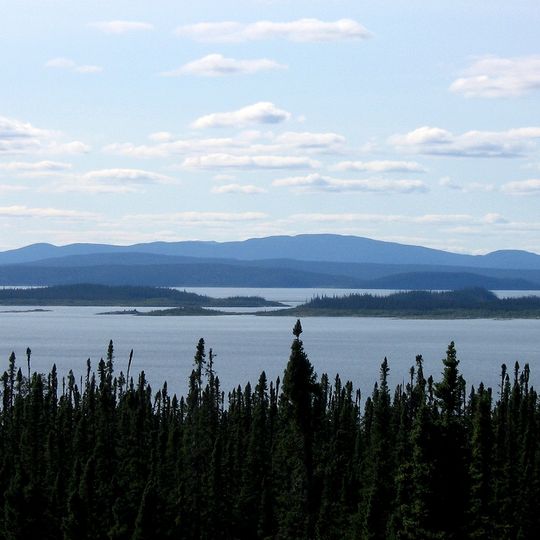
Manicouagan Reservoir is a ring-shaped body of water covering 1,942 square kilometers (750 square miles) in Quebec, Canada, encircling Île René-Levasseur at its center. Mount Babel rises on this central island, reaching a height of 952 meters (3,123 feet) above sea level, while the water surface surrounds the mainland in a wide arc.

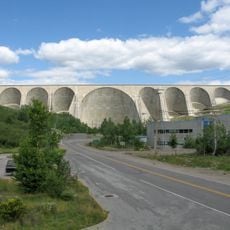
A meteorite impact 214 million years ago created a crater that filled with water over time and became a lake. The construction of the Daniel Johnson Dam in 1971 enlarged the natural water body and shaped it into its present form by damming the Manicouagan River.

The name comes from the Innu language and refers to tree bark used in traditional canoe building, showing the connection to the indigenous culture of this region. This linguistic origin recalls the long presence of native peoples in this part of Quebec, long before the reservoir was created.

The Daniel Johnson Dam regulates water levels and generates electricity through several power stations along the river. The area is remote, and access roads mainly lead to the power generation facilities and a few viewpoints along the shore.

The circular shape forms a ring of water visible from space and has become known as the Eye of Quebec. Satellite images show the nearly perfect round structure created by the ancient meteorite crater.

Location: Manicouagan

Location: Caniapiscau Regional County Municipality

Elevation above the sea: 346 m

GPS coordinates: 51.12722,-68.74722

Latest update: December 4, 2025 23:04

Meteorite craters on Earth

Meteorite craters mark locations where asteroids collided with Earth. These geological structures range from 110 meters to 300 kilometers in diameter. They often contain distinct minerals like diamonds, nickel, and copper. Scientists use the craters to study Earth's history and cosmic events.

Reviews

Visited this place? Tap the stars to rate it and share your experience / photos with the community! Try now! You can cancel it anytime.

« Manicouagan Reservoir - Circular reservoir in Quebec, Canada » is provided by Around Us (aroundus.com). Images and texts are derived from Wikimedia project under a Creative Commons license. You are allowed to copy, distribute, and modify copies of this page, under the conditions set by the license, as long as this note is clearly visible.

Discover hidden gems everywhere you go!

From secret cafés to breathtaking viewpoints, skip the crowded tourist spots and find places that match your style. Our app makes it easy with voice search, smart filtering, route optimization, and insider tips from travelers worldwide. Download now for the complete mobile experience.

Around Us App Screenshot

A unique approach to discovering new places

Le Figaro

All the places worth exploring

France Info

A tailor-made excursion in just a few clicks

20 Minutes