Lake Michigan–Huron, Interconnected freshwater lake system between Michigan and Ontario
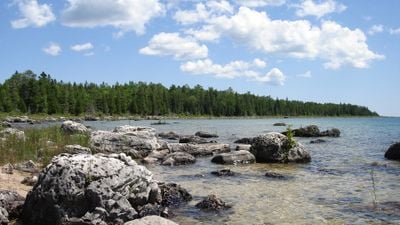
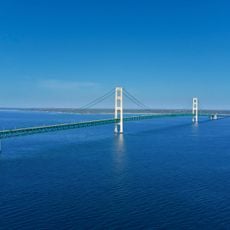
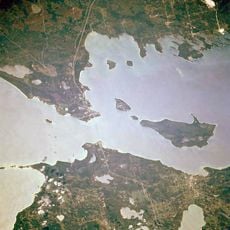
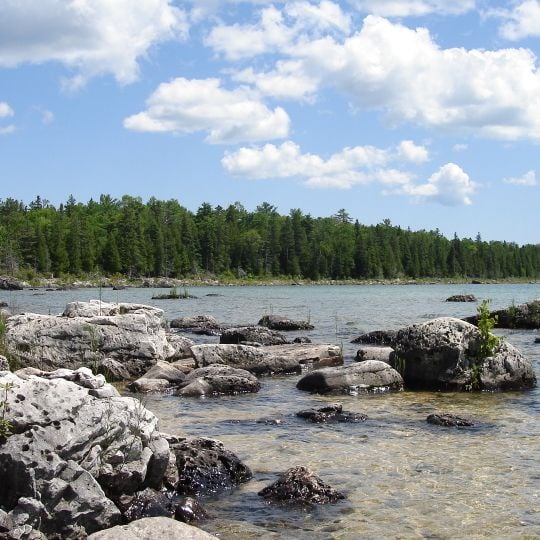
Michigan-Huron consists of two connected freshwater basins flowing through the Straits of Mackinac, covering more than 45,000 square miles. The western basin lies entirely within the United States, while the eastern basin forms the border between the United States and Canada.
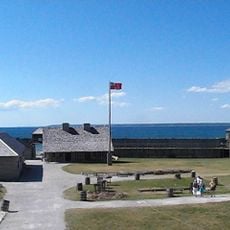
French explorers reached the waters in the 17th century, naming the eastern part Mer Douce for its sweet, drinkable water. The shoreline communities later grew through fur trade and shipping routes that still connect both sides today.
The name Michigan comes from the Ojibwe language, meaning great water, while French settlers named the eastern part after the Huron people. Both sides today draw sailors, anglers, and coastal communities who live and work on the water.
Numerous harbors and marinas along both shorelines offer access for recreational boats, fishing craft, and commercial vessels. Conditions on the water change quickly, especially in autumn when cool air masses move over the warm surface.
Archaeological research on the submerged Alpena-Amberley Ridge has uncovered hunting structures around 9,000 years old. These remains now lie underwater and show that people hunted on this now-flooded land bridge before the water level rose.
The community of curious travelers
AroundUs brings together thousands of curated places, local tips, and hidden gems, enriched daily by 60,000 contributors worldwide.