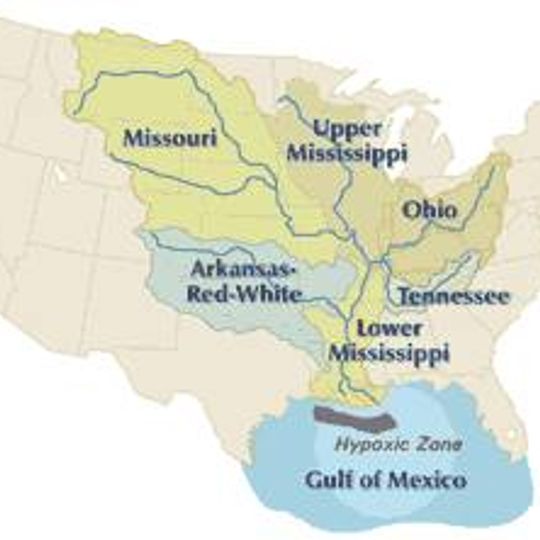
Mississippi River drainage basin, Drainage basin in central North America.
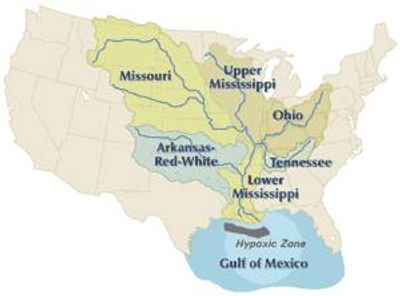
The Mississippi River drainage basin is a drainage system in central North America that gathers water from the Rocky Mountains to the Appalachian range through a network of rivers feeding into the main channel. Major tributaries including the Missouri, Ohio, and Arkansas flow into the Mississippi, forming a branching system that eventually empties into the Gulf of Mexico.
Indigenous groups used the waterways for thousands of years as routes for trade and travel between different regions. European explorers mapped the system starting in the 16th century, and later settlements grew along the banks, depending on access to the water.
The basin connects diverse agricultural communities, from Minnesota's grain fields to Louisiana's cotton plantations, fostering regional trade and economic interdependence.
The system can be experienced at different points, from riverside paths in cities to overlooks in rural areas, with water levels varying by season and rainfall. Information about access points and conditions is available at visitor centers along the main rivers.
The basin provides drinking water to around 18 million people and irrigates farmland across several climate zones. The width of the waterway varies greatly, from narrow channels in the upper reaches to wide sections near the mouth.
The community of curious travelers
AroundUs brings together thousands of curated places, local tips, and hidden gems, enriched daily by 91,146 contributors worldwide.