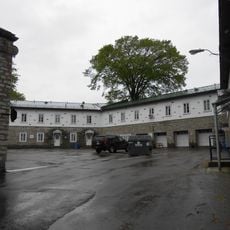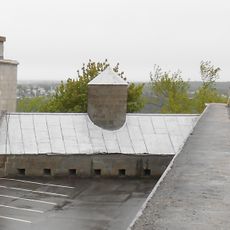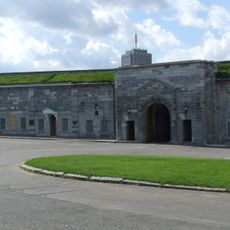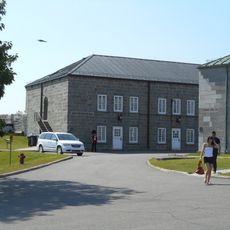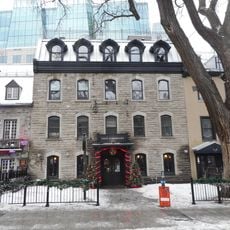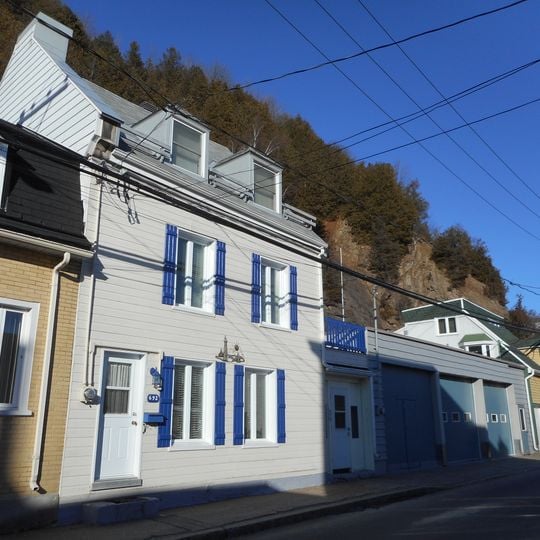
Cap-Blanc, Residential district in Vieux-Québec, Canada
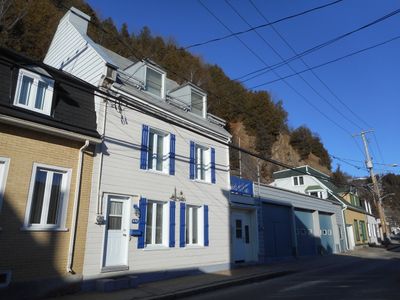
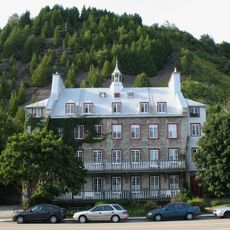
Cap-Blanc is a residential district stretching along the St. Lawrence River at the base of limestone cliffs, forming a narrow strip of land sandwiched between water and rock. The buildings are tightly clustered together, making efficient use of the confined space between the river and the cliff face.
The area emerged in the 19th century as a settlement for port workers and shipbuilders who supported Quebec City's maritime economy. These working-class origins shaped the district and continue to influence its character today.
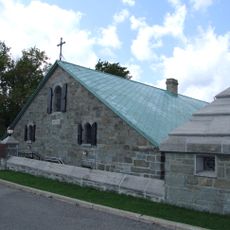
The name Cap-Blanc first appeared in 1805 and is said to be a literal translation of an Indigenous toponym describing the cape's original white appearance. Notre-Dame-de-la-Garde church, built in 1833, is the district's only religious building. The Maison de la littérature occupies a former Scandinavian sailors' church, the first Sjomannskirken in North America.
The connection to Upper Town happens through the Cap-Blanc stairs, a long flight of about 400 steps carved through the cliff. These stairs serve as the main pedestrian route for residents and visitors traveling between the lower district and the upper old town.
The Cap-Blanc staircase, which links the shoreline to the Plains of Abraham, has 398 steps and is the longest staircase in Quebec City; its construction is dated to around 1869. It is the main pedestrian route between the lower district and the Upper Town.
The community of curious travelers
AroundUs brings together thousands of curated places, local tips, and hidden gems, enriched daily by 93,794 contributors worldwide.