Jesuit House of Sillery, Historic farmhouse museum in Sillery district, Quebec City, Canada.
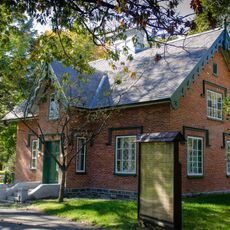
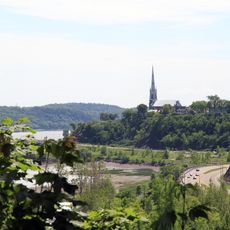
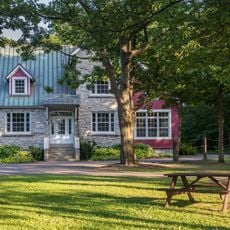
The Jesuit House of Sillery is a historic building on chemin du Foulon in Quebec City's Sillery district, near the Saint Lawrence River and the Samuel-De Champlain promenade. The current house, likely the third on the site, dates from the early 18th century and was built as a country residence for the Jesuits. It is part of the former Saint-Joseph de Sillery mission and now presents a permanent exhibition on the meeting of Indigenous peoples, missionaries and Europeans, with several hundred archaeological and ethnological objects.
The current house is the third Jesuit residence on the site, built in the early 18th century as a country residence; the first two burned. After the Seven Years' War, James Murray demanded the Jesuits' suppression and seizure of their property in 1762, and the domain was leased to merchant John Taylor Bondfield, who undertook major repairs. Later tenants included Anglican chaplain John Brooke and his wife Frances Moore Brooke, then merchants in timber, hops and brewing.
The house tells the story of daily life shared between French Jesuits and Indigenous peoples during early settlement. Visitors can see how these communities coexisted and influenced each other through the objects on display.
The museum is located in the Sillery neighborhood and offers guided tours in both French and English for a deeper understanding of the site. Plan your visit during quieter times to fully explore the exhibitions at your own pace.
The structure blends European construction techniques with local materials and practical adaptations that settlers developed for life in North America. This combination reveals how colonists modified their building styles to suit the region's climate and available resources.
The community of curious travelers
AroundUs brings together thousands of curated places, local tips, and hidden gems, enriched daily by 94,015 contributors worldwide.