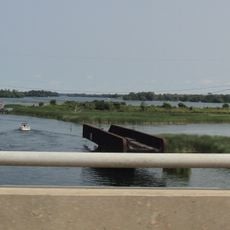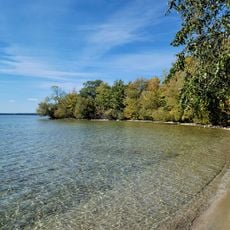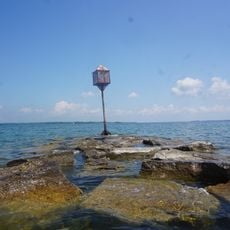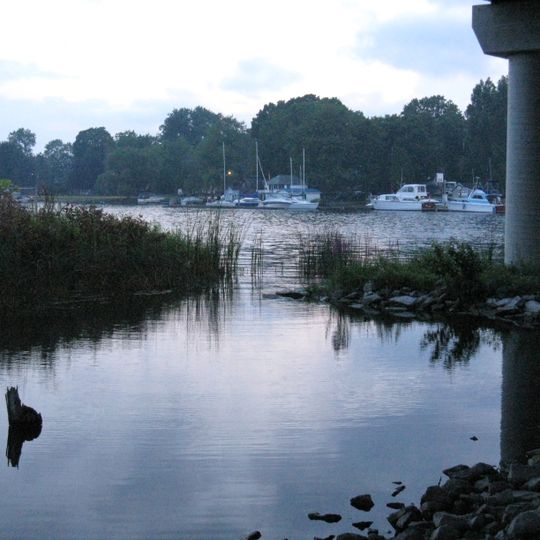
Mnjikaning Fish Weirs, Native American fishing structure in Atherley Narrows, Canada.
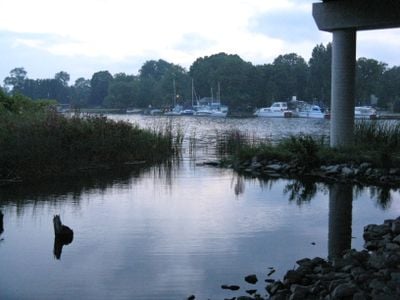
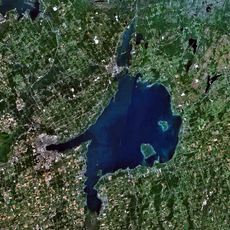
The Mnjikaning Fish Weirs are an archaeological site at Atherley Narrows in Ontario, Canada, made up of submerged wooden stakes arranged across the narrow channel connecting Lake Couchiching and Lake Simcoe. The stakes were placed to funnel fish into shallower areas where they could be caught more easily.
These fish traps were first built around 4500 years ago, making them among the oldest known fishing structures in North America. They were repaired and rebuilt over time, which shows the site was actively used across many generations.
The Mnjikaning Fish Weirs sit within Anishinaabe territory, and the name itself comes from the Ojibwe language. Local Indigenous communities still hold a strong connection to this site and consider it part of a living tradition rather than a relic of the past.
A path from Bridge Street leads under the Highway 12 bridge to a viewing platform where the submerged stakes can be seen. Calm water and good light make the structures easier to spot, so early morning visits often give the clearest view.
The wood used for the stakes comes from eastern white cedar, sugar maple, and white birch, and samples from these submerged pieces have been dated using radiocarbon analysis. This dating process revealed that different parts of the weir were built at different times, showing that the structure was expanded and modified rather than built all at once.
The community of curious travelers
AroundUs brings together thousands of curated places, local tips, and hidden gems, enriched daily by 91,382 contributors worldwide.