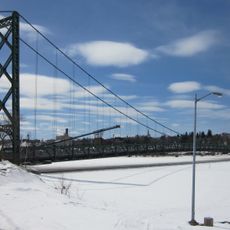
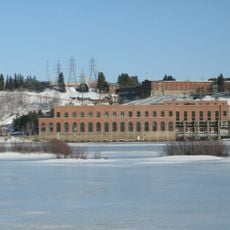
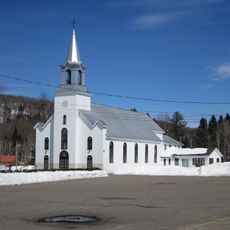
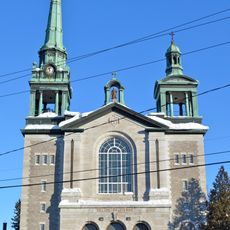
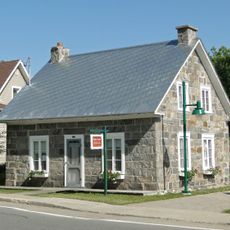
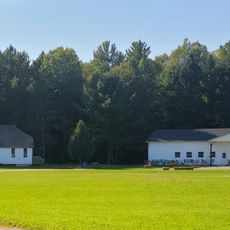
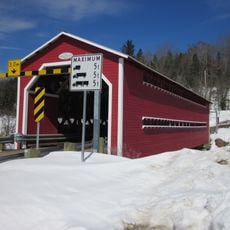
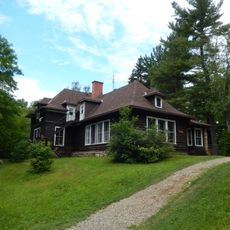
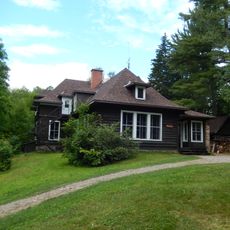
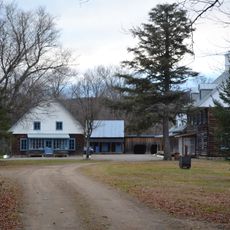
Seigneurie de Batiscan, Historical manor in Saint-Roch-de-Mékinac, Canada.
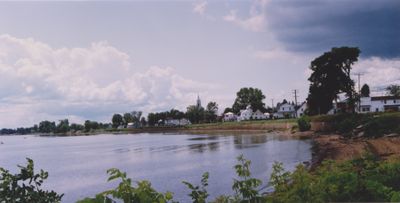
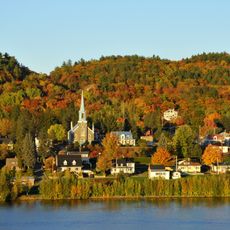
The Seigneurie de Batiscan was a seigneurial estate on the north shore of the St. Lawrence River, running from the Batiscan River to the Champlain River in Mauricie, Quebec. Its frontage measured half a league on the river, but it ran 20 leagues deep, past the Saint-Maurice River, making it the deepest seigneurie of New France. Settlers' lots were laid out in rows along the river, and the land rises northward across the Saint-Narcisse moraine.
The seigneurie was granted to the Jesuits by notarial deed on 13 March 1639, signed in Paris by Jacques de La Ferté, abbot of Sainte-Marie-Madeleine de Châteaudun. Busy at Trois-Rivières and fearing Iroquois attacks, the Jesuits delayed settlement; brother François Malherbe formally took possession and had the boundaries surveyed. Colonization began in 1666, after lots were first allotted in 1665, and the Jesuits granted 79 concessions between 1665 and 1674.
The seigneurial system created a structured social order where landowners and tenants formed close-knit rural communities built on mutual obligation. Local residents shaped their lives around the rhythms of farming and the authority of the manor, making these relationships central to daily existence.
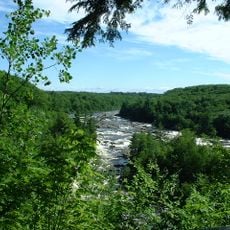
The territory is located along the north bank of the St. Lawrence River in an area defined by waterways and river plains that historically facilitated access and settlement. Many of the historical sites are spread across a wide area and reached by rural roads, so visitors benefit from planning their route in advance.
The seigneurie's northern boundary lay beyond the source of the Saint-Maurice River, making it the deepest seigneurie in the seigneurial system of New France. Its frontage on the St. Lawrence measured only half a lieue, between the Batiscan and Champlain rivers.
The community of curious travelers
AroundUs brings together thousands of curated places, local tips, and hidden gems, enriched daily by 93,759 contributors worldwide.