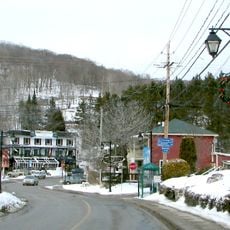
Laurentian Upland, Geographic region in eastern Canada
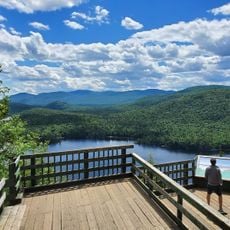
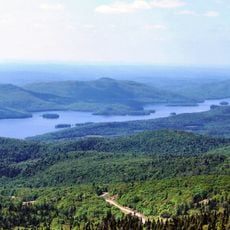
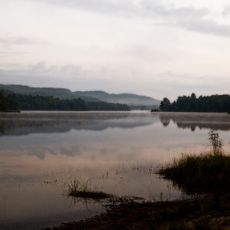
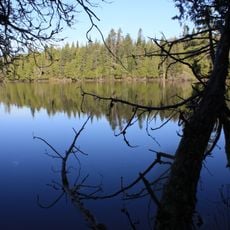
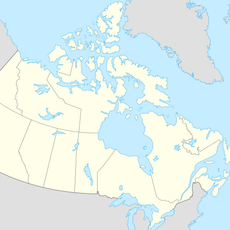
The Laurentian Upland is a hilly region in eastern Canada covered with ancient rock formations from the Precambrian era. It spans across Quebec and Ontario, with elevations ranging from 240 to 425 meters (790 to 1,395 ft), though Mont Raoul Blanchard rises to approximately 1,166 meters (3,825 ft).
The region formed roughly one billion years ago during the Grenville orogeny, a major geological event that shaped its ancient bedrock. This makes it among the oldest and most geologically stable parts of North America, predating the ice ages by hundreds of millions of years.
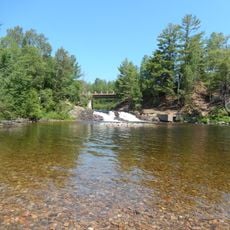
The name comes from Saint Lawrence, the patron of the nearby Saint Lawrence River that flows through the landscape. Local communities have long used the forests and waterways for hunting, fishing, and outdoor recreation.
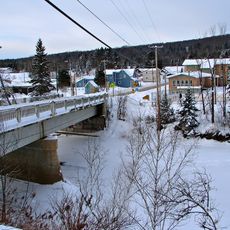
The region extends from the Gatineau River in the west to the Saguenay River in the northeast, with numerous hiking trails and outdoor access points throughout. Visitors should prepare for variable weather conditions, particularly during winter when snow covers much of the terrain.
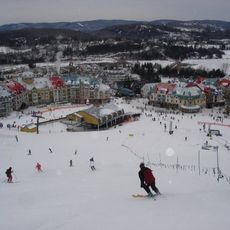
North America's first ski lift was built here in 1931, pioneering mechanized winter sports across the continent. This early installation transformed the hillside into a destination for a new form of recreation.
The community of curious travelers
AroundUs brings together thousands of curated places, local tips, and hidden gems, enriched daily by 91,143 contributors worldwide.