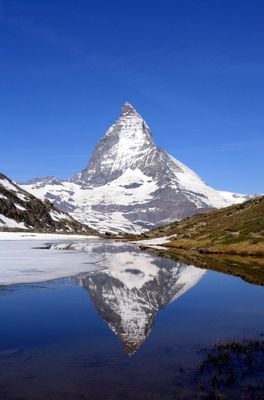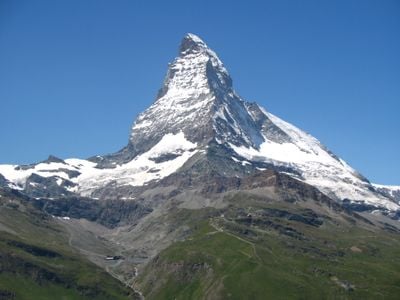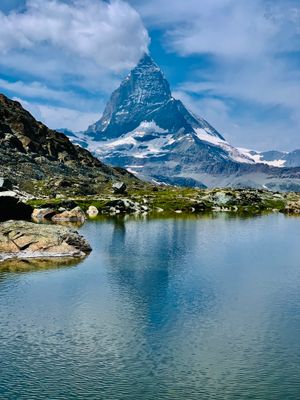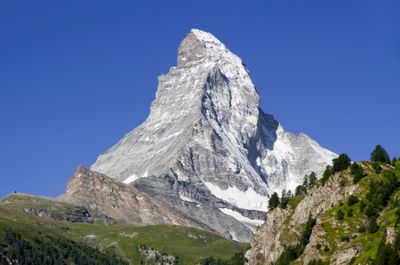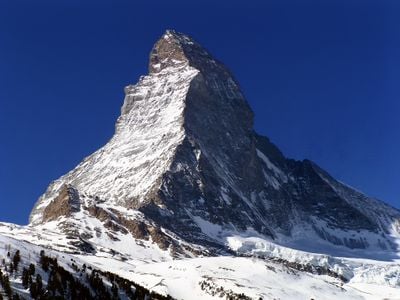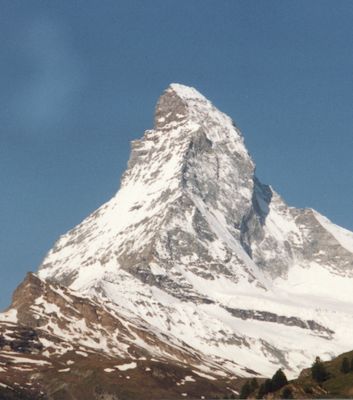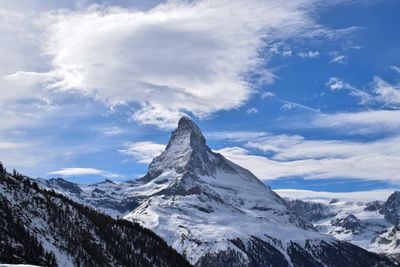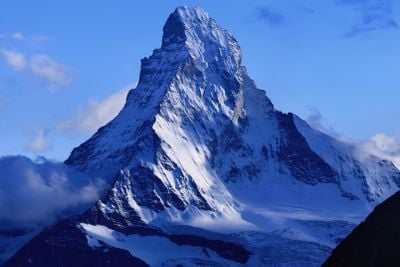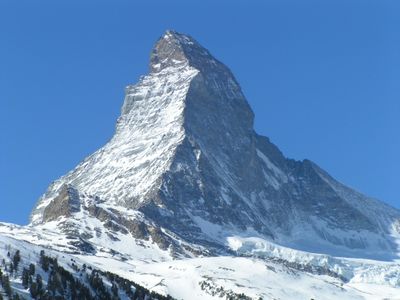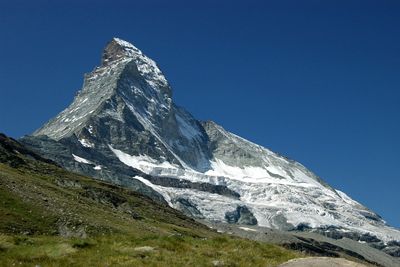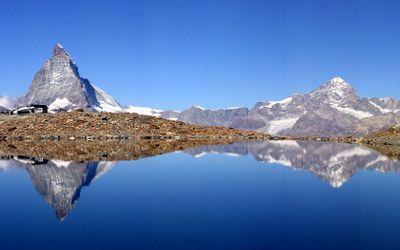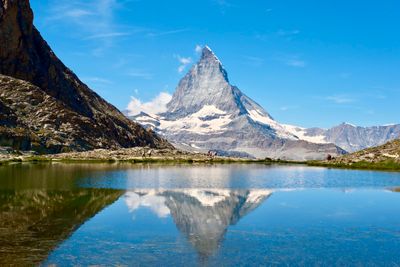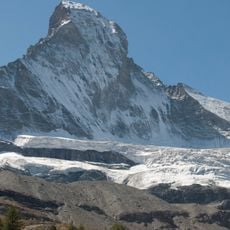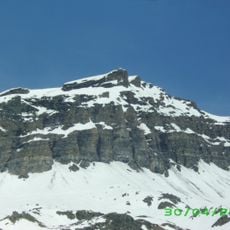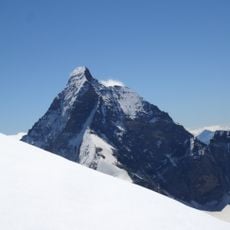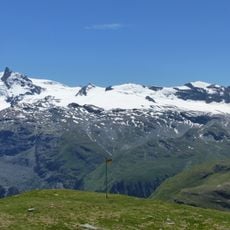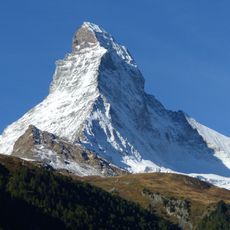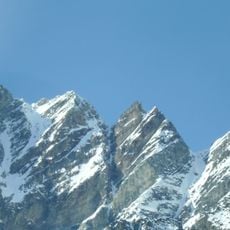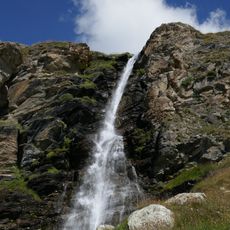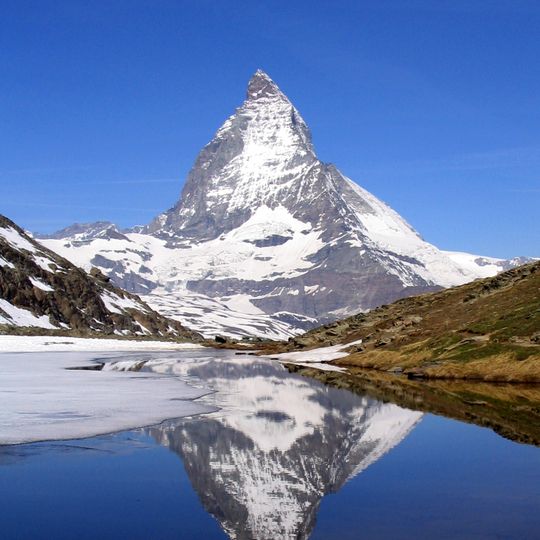
Matterhorn, Alpine mountain at Swiss-Italian border.
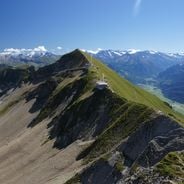
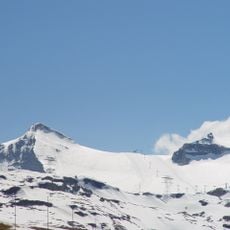
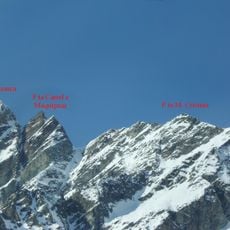
The Matterhorn stands 4478 meters tall on the border between Switzerland and Italy, forming a near-perfect pyramid with four steep faces above the valleys of Zermatt and Breuil-Cervinia. Its north face drops directly over Zermatt, while the south face looks toward Italy, and both sides show bare rock with narrow ridges leading to the summit.
Edward Whymper led the first successful ascent in July 1865, though the expedition ended in tragedy when four climbers died during the descent. The disaster sparked debate over the dangers of mountaineering and turned the peak into a symbol of the risks that come with climbing.
Mountain guides in Zermatt and Breuil-Cervinia pass down knowledge of the routes through family lines that stretch back more than a century. You can still see the old ropes and tools in local mountaineering museums, where villagers share stories of the early expeditions.
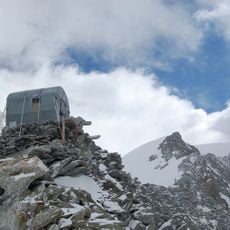
The climbing season runs from mid-June through mid-September, when conditions are most stable and the mountain huts remain open. The two main routes begin at Hörnli Hut on the Swiss side and Carrel Hut on the Italian side, both requiring technical skill and acclimatization.
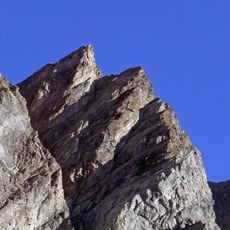
The rock consists of African layers pushed on top of European plates, and this geological structure becomes visible during the climb through different rock colors. Researchers found that the upper sections were once part of a distant continent that migrated here millions of years ago.
The community of curious travelers
AroundUs brings together thousands of curated places, local tips, and hidden gems, enriched daily by 60,000 contributors worldwide.