Lac de Montsalvens, lake in the Canton of Fribourg, Switzerland
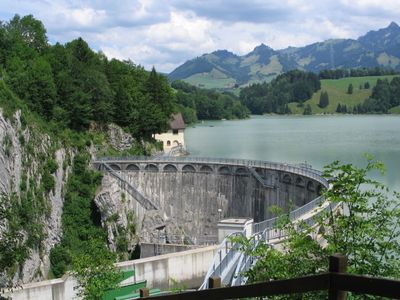
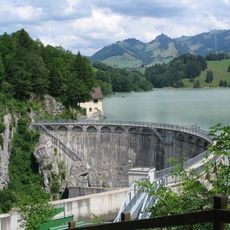
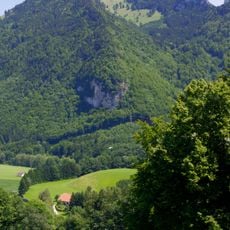
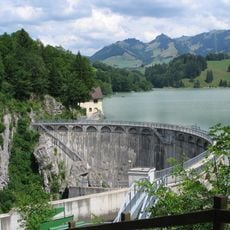
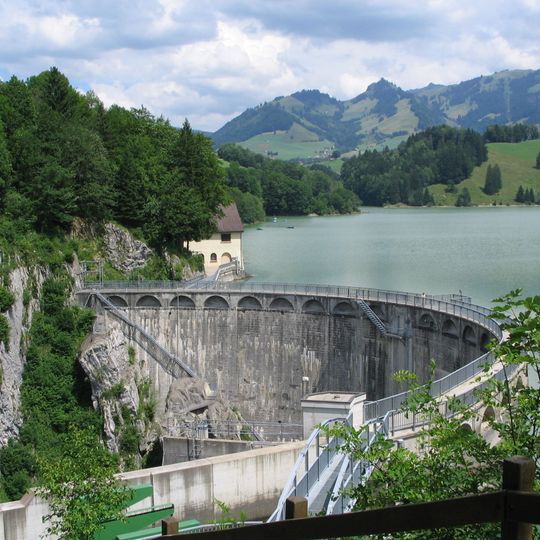
Lac de Montsalvens is a reservoir in the Canton of Fribourg, Switzerland, created by a dam built on the Jogne river. The water is fed by mountain streams from above, and the dark, clear lake is surrounded by forests, rocky slopes, and rolling pastures in a sheltered valley.
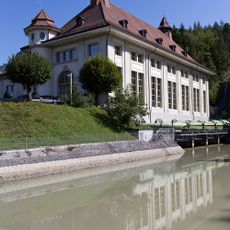
Construction of the dam began in 1918 and was completed in 1920, following engineer Alfred Stucky's innovative design for a curved arch dam with both vertical and horizontal curves. The reservoir filled with water in 1921 and became an early example of hydroelectric engineering in the region.
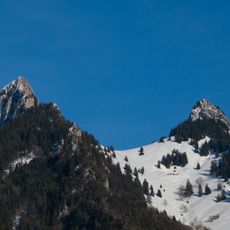
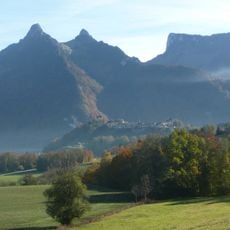
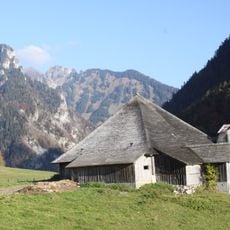
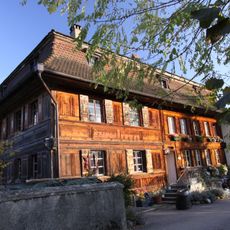
The lake takes its name from the nearby Montsalvens mountain and is connected to local farming traditions maintained by generations of shepherds and farmers in the region. Walking along the shore, you can observe how the surrounding pastures and forests form part of the daily landscape that people here have cultivated for centuries.
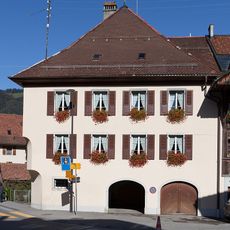
The walk around the lake is easy and takes about three hours to cover roughly nine kilometers, though the ground can become slippery after rain. Sturdy footwear is recommended, and the route follows the shoreline through forests and open hills with good bus access from the villages of Châtel-sur-Montsalvens and Charmey.
When completed in 1920, the dam was Europe's first arch dam to curve both vertically and horizontally at the same time, a milestone in engineering of that era. This groundbreaking design influenced how engineers across Europe approached similar projects in the decades that followed.
The community of curious travelers
AroundUs brings together thousands of curated places, local tips, and hidden gems, enriched daily by 91,504 contributors worldwide.