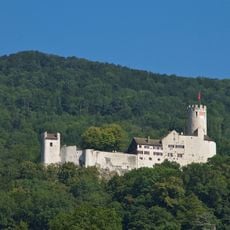
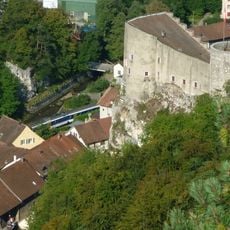
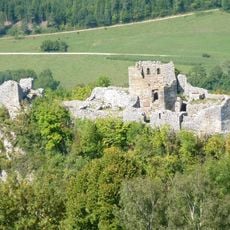
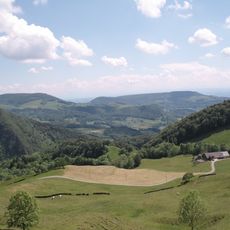
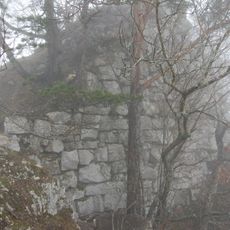
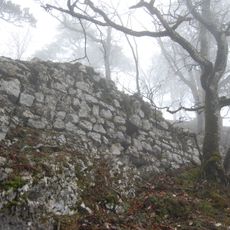
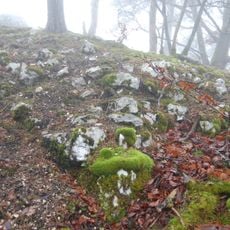
Neu-Falkenstein Castle, Castle ruin in Balsthal, Switzerland.
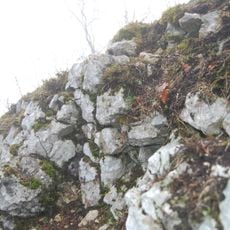
Neu-Falkenstein is a castle ruin set on a rocky spur above the Swiss town of Balsthal, with walls still standing around 50 feet (16 meters) tall. The remains include a prominent residential tower and sections of the surrounding curtain wall that give a clear sense of the original layout.
The castle was probably built in the early 12th century by a local noble family; the brothers Welf and Ulrich von Falkenstein appear in a 1145 document of doubtful authenticity. In the early 13th century a branch of the Bechburg family settled here as counts of Falkenstein and added a large hall building and a round keep. The Basel earthquake of 1356 caused damage whose repair came close to a new build, hence the name Neu-Falkenstein. In 1374 Henmann von Bechburg robbed a Basel merchant convoy of saffron near St. Wolfgang; a 14-week siege followed, the castle was taken and partly destroyed, and sixteen defending mercenaries were beheaded in the courtyard. Solothurn acquired it in 1417 and kept a bailiff here until 1798.
The name Neu-Falkenstein (New Falkenstein) marks it as the later of two castles: Alt-Falkenstein, built around 1250 by Rudolf von Falkenstein on the valley side, still stands opposite. The ruin is a Swiss heritage site of national significance. The castle's own name is thought to reflect the near-rebuilding after the 1356 Basel earthquake.
The ruin is reached on foot from Balsthal along well-marked hiking trails, with the climb taking around half an hour at a moderate pace. The rocky path can get slippery in wet weather, so sturdy footwear is a good idea.
The castle's name is misleading: despite "Neu" (new), it is thought to be older than Alt-Falkenstein on the opposite side of the valley. Around 1250 Rudolf von Falkenstein founded Alt-Falkenstein and a fortified outer bailey at the foot of the castle rock.
The community of curious travelers
AroundUs brings together thousands of curated places, local tips, and hidden gems, enriched daily by 94,147 contributors worldwide.