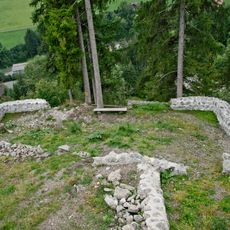
Artilleriewerk Jaunpass, Military fortress in Jaunpass, Switzerland
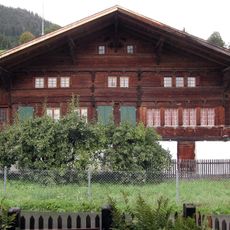
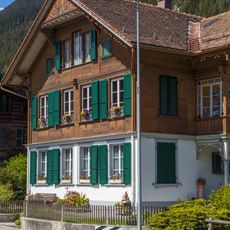
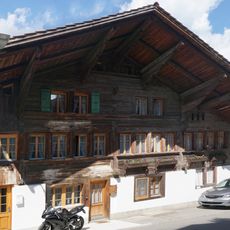
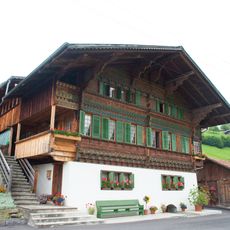
Artilleriewerk Jaunpass is a Swiss Army artillery position on the Jaunpass summit at 1509 m, linking the canton of Fribourg with the canton of Bern. It consists of eight 10.5 cm casemates, built as monoblocks and disguised as alpine huts on open meadows. Four guns (A 1711–1714 East) stand right of the pass road and four (A 1715–1718 West) left of it, before and after the summit toward Jaun. Each bunker fired autonomously and was cabled to its battery fire-control post; the positions were not linked by tunnels.
From 1941 the Mountain Infantry Regiment 7 formed the Jaun combat group, tasked with blocking the Jaun valley axis from Broc and the approach over the Euschels pass. The fortifications were planned by the Technical Office of the Chief of Engineer Troops, with troops doing excavation and civilian firms handling blasting; the eight 10.5 cm casemates were numbered A 1711 to A 1718, four east and four west of the pass road. After the Second World War the bunkers served for live-fire training, and in 2001 the association of artillerymen and train soldiers of the Sense district acquired two of the eight.
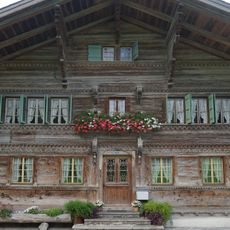
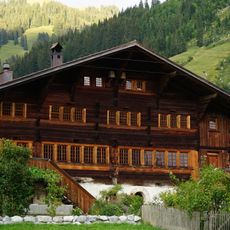
The eight gun bunkers were disguised as alpine huts and stand openly on the alp meadows, four east (A 1711–1714) and four west (A 1715–1718) of the pass road. After the war they served for live-fire group training, since most works around Lake Thun lay in residential areas. In 2001 the association of artillerymen and train soldiers of the Sense district acquired two of the eight bunkers.
The eight gun bunkers stand openly on the alpine meadows on both sides of the pass road, four east (A 1711–1714) and four west (A 1715–1718) of the pass summit toward Jaun. They are not linked by tunnels, so visiting means walking between separate structures. The site is on the Jaunpass at 1509 m, reachable by road from Boltigen or Charmey.
The eight casemates were disguised as alpine huts and stood openly on the alp meadows, four east of the pass road (A 1711–1714) and four west (A 1715–1718). Each gun position fired autonomously, linked by cable to its battery fire-control post, and the positions were not joined by a tunnel system. In 2001 the association of artillerymen and train soldiers of the Sense district acquired two of the eight bunkers.
The community of curious travelers
AroundUs brings together thousands of curated places, local tips, and hidden gems, enriched daily by 93,895 contributors worldwide.