Nécropole néolithique du Petit-Chasseur, Neolithic necropolis and megalithic site in Sion, Switzerland
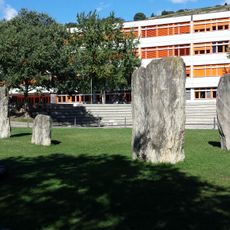
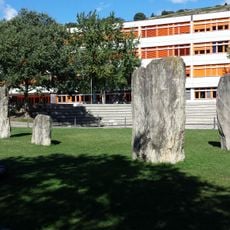
The Nécropole néolithique du Petit-Chasseur lies in the Le Petit-Chasseur district of Sion, Valais. Its oldest monuments, M VI and M XII, are small rectangular dolmens of flat limestone built above ground with a lateral entrance and antenna-like forecourts, framed by a long triangular low stone mound called a podium that stopped below the dolmen tops. Later Antendolmen, dating to around 2400 BC, lack the podium. Engraved stones stand in the alignment of Chemin des Collines.
The dolmens were discovered from 1961 onward at Le Petit-Chasseur in Sion. The oldest structures, M VI and M XII, are small rectangular dolmens of flat limestone built above ground with a lateral entrance; they date to around 2900–2200 BC and belong to the Saône-Rhône culture. Later Antendolmen, dating to around 2400 BC, were built by the people of the final Valais Neolithic. The Bell Beaker culture reused the site and erected new dolmens and stone cists. Dolmen M XII contained the remains of at least 90 individuals.
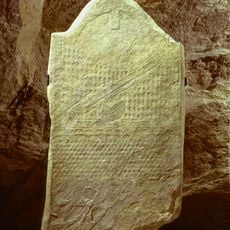
The carved stones feature detailed depictions of human figures adorned with geometric patterns and solar symbols, showing how artistic skills developed during the Neolithic. These engravings reveal what mattered to the people who created this burial place.
The main dolmen M VI remains accessible under a protective shelter, allowing visitors to see how Neolithic construction techniques were applied. The site is easy to navigate on foot and provides close access to the stone arrangements.
The dolmen M XII held the remains of at least 90 individuals, the largest burial group recorded at the site. The engraved stones of the Chemin des Collines alignment lie nearby, and the same megalithic tradition reaches across the Alps to Saint-Martin-de-Corléans in Aosta, Italy.
The community of curious travelers
AroundUs brings together thousands of curated places, local tips, and hidden gems, enriched daily by 94,124 contributors worldwide.