Schloss Wädenswil, Regional heritage château in Wädenswil, Switzerland.
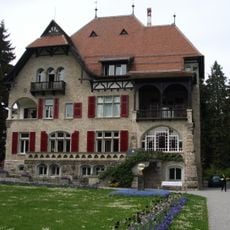
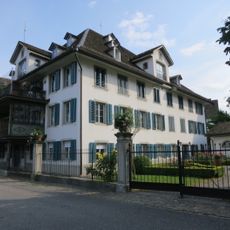
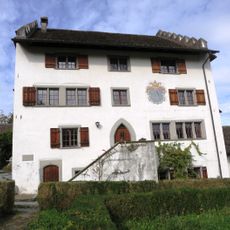
Schloss Wädenswil stands on a hill above the municipality of Wädenswil in the canton of Zurich. The present building is a Neoclassical structure begun in 1816 by Zurich architect Hans Conrad Stadler, replacing the earlier bailiff's castle that burned down on 24 March 1804 during the Bockenkrieg. Since 1890 it has housed the Swiss German experimental station for fruit, vine and horticulture, today part of Agroscope.
Zurich authorities built the castle between 1550 and 1555 after purchasing the Wädenswil estate from the Knights of St. John in 1549. The location played a role in Swiss Reformation movements during the early modern period.
The castle's name comes from the Wädenswil bailiwick, and its 250 years as a Zurich seat of power left a mark on local administration. Since 1890 the site has housed a fruit, wine and horticulture research station, now Agroscope Changins-Wädenswil. Its first director, Hermann Müller-Thurgau, bred the Riesling x Sylvaner vine here.
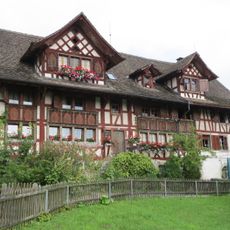
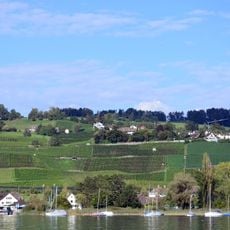
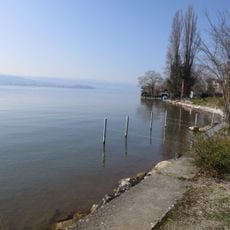
The castle houses an active research station and is not designed as a regular tourist destination for casual visits. Visitors can explore the grounds from outside and admire the historic architecture from the lake or surrounding paths.
Hermann Müller-Thurgau, the first director of the station, created a grape variety here that shapes Swiss vineyards to this day. The variety named after him arose from a cross-breeding and is still grown in wineries around the world.
The community of curious travelers
AroundUs brings together thousands of curated places, local tips, and hidden gems, enriched daily by 94,517 contributors worldwide.