Glacier Garden of Lucerne, Geological park and museum in Lucerne, Switzerland
Glacier Garden of Lucerne displays rock formations created thousands of years ago by massive sheets of ice, along with fossilized remains from even older periods. The site combines outdoor areas with underground spaces that offer visitors different perspectives on the area's geological past.
Josef Wilhelm Amrein-Troller discovered the first glacial potholes here on 2 November 1872 while digging a wine cellar; the hollows had formed roughly 20,000 years earlier. He opened the museum on 1 May 1873, and the Swiss-chalet museum building followed in 1874, with excavations continuing until 1876. After his death his widow Marie Amrein-Troller drove the site's expansion, adding the ticket house and Schwyzerhüsli in 1884, extending the main building in 1895 and building the clubhouse with its glacier diorama in 1896.
The name Gletschergarten refers to the glacier pots found here, and the site is run by the Gletschergarten Luzern foundation. The Alhambra mirror labyrinth, built in 1896 for the national exhibition in Geneva, has stood in Lucerne since 1899. The park's Alpine garden holds 4,000 different plants.
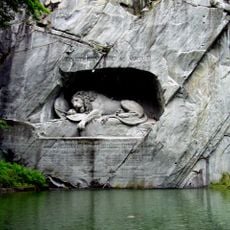
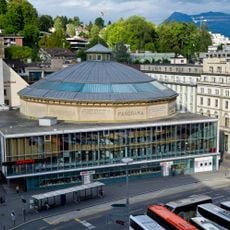
The entrance is near the Lion Monument, with the Bourbaki Panorama and Alpineum next door. The park climbs to the Sommerau viewpoint, reached since 2022 through the rock interior of the Felsenwelt; the 1875 tower stands at the top. Paths and stairs are uneven in places, so wear sturdy shoes.
The mirror maze Alhambra was made for the 1896 national exhibition in Geneva and has stood in Lucerne since 1899. Its halls copy the Alhambra of Granada. The landscape relief of the Urschweiz, built by Franz Ludwig Pfyffer between 1762 and 1786, is held to be the oldest of its kind in the world.
The community of curious travelers
AroundUs brings together thousands of curated places, local tips, and hidden gems, enriched daily by 92,762 contributors worldwide.