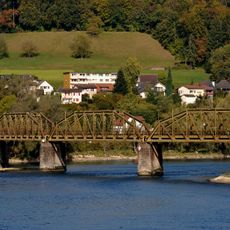
Railroad viaduct Koblenz-Waldshut, Railway bridge at Germany-Switzerland border, connecting Waldshut-Tiengen and Koblenz.
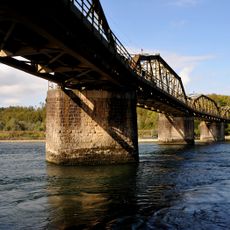
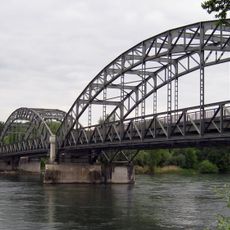
The Koblenz-Waldshut railroad viaduct is a steel truss bridge that crosses the Rhine between Germany and Switzerland. The structure connects the German town of Waldshut-Tiengen with the Swiss village of Koblenz through a system of heavy metal beams and supports.
The viaduct was completed in 1859 and marked the first railway connection between Germany and Switzerland. The bridge was built as part of a larger railway line that brought both countries closer together and made trade easier.
The structure shows 19th-century engineering craftsmanship and how builders worked with the river and national boundaries at that time. Visitors can still see the careful metalwork and massive supports from both sides of the Rhine.
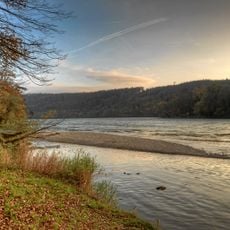
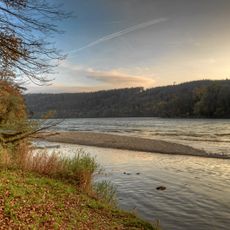
The bridge carries only trains, so walkers cannot cross it; the S27 and S36 services run over it. The masonry viaduct with six arches stands on the Swiss bank, about 100 metres downstream of the Koblenz–Waldshut road bridge, and the riverbanks on both sides give the clearest view of the truss.
The structure was designed with generous spacing to eventually accommodate a second railway track, though this was never constructed. This forward-thinking approach shows how engineers of that era already planned for long-term traffic growth.
The community of curious travelers
AroundUs brings together thousands of curated places, local tips, and hidden gems, enriched daily by 94,325 contributors worldwide.