Kapuzinerkloster Waldshut, monastery in Germany
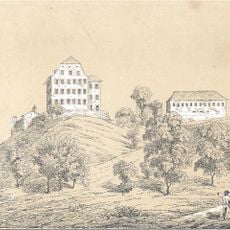
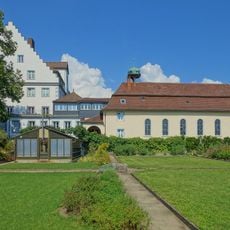
Kapuzinerkloster Waldshut is a 17th-century monastery building located in Waldshut-Tiengen on the Rhine. The complex features a simple church, monks' quarters, and various service buildings arranged around an inner courtyard with gardens, designed according to the Capuchin order's principles of simplicity.
Capuchin foundations in Further Austria served the Counter-Reformation; planning for Waldshut began in 1650, the site was transferred to the order in 1652, and Franz I. Chullot of St. Blasien laid the foundation stone on 14 June 1654. The convent church was consecrated on 7 September 1659 by Konstanz bishop Franz Johann Vogt von Altensumerau. The monastery was dissolved in 1821, and from 1859 the Spitalfond Waldshut used the repeatedly rebuilt complex, later the hospital and today the Klinikum Hochrhein.
The monastery church was dedicated on 7 September 1659 by Konstanz bishop Franz Johann Vogt von Altensumerau und Prasberg, with the presbytery under St Anthony of Padua and the lay church under the Immaculate Virgin Mary. In 1681 the Capuchin preacher Marco d'Aviano, invited by council and citizens, gave his blessing here. A dispute with the city in 1758 concerned the installation of Stations of the Cross in the lay church.
The site is conveniently located in central Waldshut-Tiengen and easily accessible from the town center. A chapel from the former monastery is now integrated into a medical facility, while other sections are privately held or repurposed.
The monastery's church was dedicated in 1659, with the presbytery under the patronage of St Anthony of Padua and the lay church under the Immaculate Virgin Mary. Two princely heart burials were walled into the presbytery: Prince-Bishop Johann Franz von Schönau, who died in 1656, and Landgrave Johann Ludwig II von Sulz, who ordered his own in 1687.
The community of curious travelers
AroundUs brings together thousands of curated places, local tips, and hidden gems, enriched daily by 92,880 contributors worldwide.