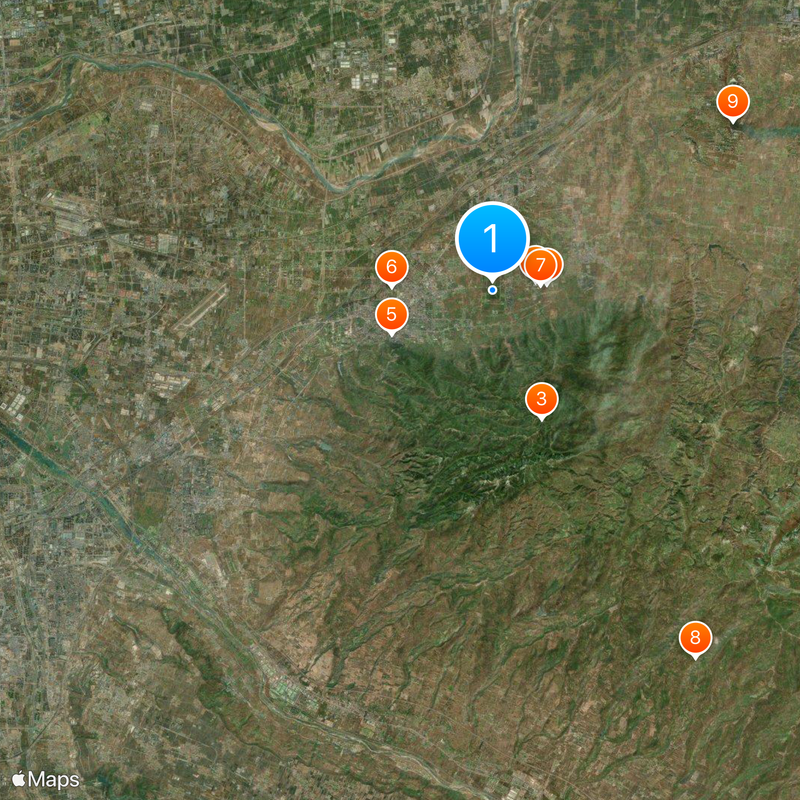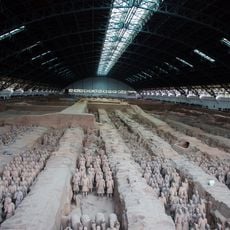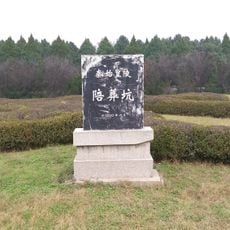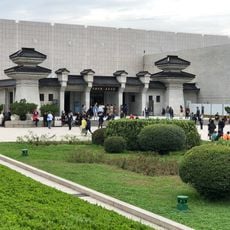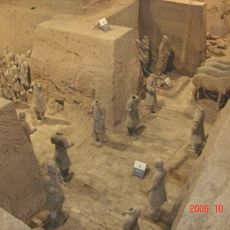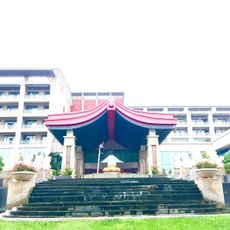
Mausoleum of the First Qin Emperor, Funeral complex in Lintong District, China.
The Mausoleum of the First Qin Emperor is an underground burial complex in Lintong, China, covering several hectares and composed of chambers, corridors, and storage halls arranged beneath an artificial mound. Rectangular walls surround the central tomb area and separate ceremonial zones from workshops and stables built to serve the ruler in his next existence.
Construction started in 246 BC when the future ruler ascended the throne at age 13 and continued until 208 BC, mobilizing more than 700,000 workers and craftsmen. The complex was sealed after the ruler's death in 210 BC, then partly looted during uprisings that followed the dynasty's collapse.
The name honors the emperor who unified warring kingdoms into a single realm and standardized writing, currency, and measurements. Visitors today walk through reconstructed ceremonial spaces that show how ancient Chinese rulers imagined power continuing beyond death.
Tour groups from Xian reach the site in roughly one hour, though most of the burial complex remains underground and closed to entry. Exhibition halls displaying terracotta figures open year-round, while the central tomb mound is visible only from the outside.
Scientific instruments detect unusually high mercury levels in the soil beneath the central mound, confirming ancient chronicles that describe rivers of liquid metal flowing inside. This substance was meant to replicate the waterways of the realm and deter tomb robbers at the same time.
The community of curious travelers
AroundUs brings together thousands of curated places, local tips, and hidden gems, enriched daily by 60,000 contributors worldwide.