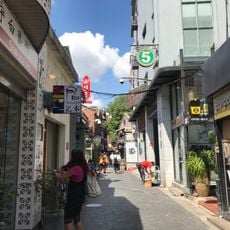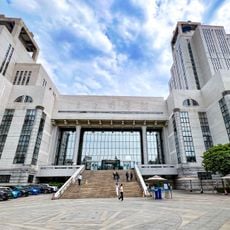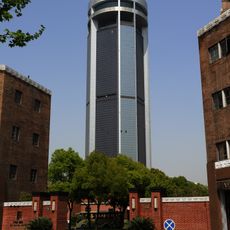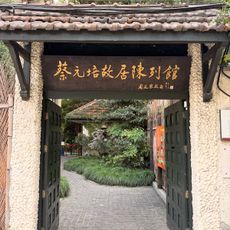
Shanghai Museum of Arts And Crafts, Traditional craft museum in Xuhui District, Shanghai, China.
The Shanghai Museum of Arts and Crafts displays textiles, ceramics, bamboo carvings, and woodwork across multiple gallery spaces. These objects come from different periods and show the craft traditions that developed over centuries in China.
The building at 79 Fen Yang Road was erected in 1905 as the residence of the director-general of the French Concession's municipal council, though some sources date it to 1921–22 to a design by Hungarian architect László Hudec. After the Second Sino-Japanese War it housed the UN World Health Organization's first Asia-Pacific office, and mayor Chen Yi lived there after 1949. The arts and crafts research institute moved in in 1963, and the museum opened in October 2002.
The museum's three halls are devoted to folk crafts, carving, and weaving and embroidery, tracing the history of Shanghai's craft genres. Among the pieces on show are Feng Qiuping's knitted Peacock Shawl, paper cuts by Lin Ximing and Wang Zigang, and the ivory carving The Burning of Red Cliff. The building is known locally as the Little White House.
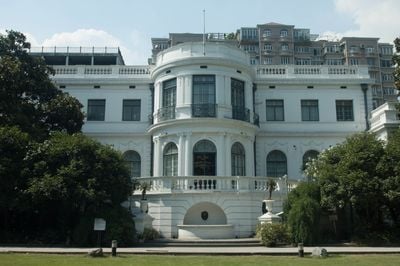
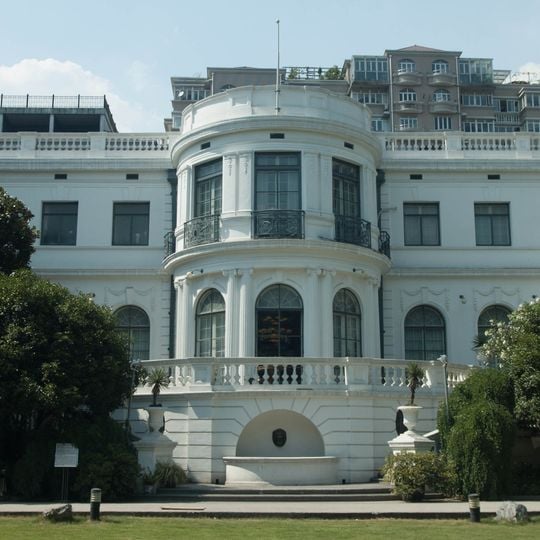
The museum occupies the three-storey main building at 79 Fengyang Road in Xuhui, with 1,500 square metres of galleries. The entrance is reached by the symmetrical open double staircase that climbs from the lawn to the first-floor terrace. The building was listed as a Shanghai cultural relic protection unit in 1989.
The building is known as the "Little White House" for its white facade in the French late-Renaissance style. Its plan bulges in a semicircular bay in the middle, the entrance faces south, and an open double staircase climbs symmetrically from both sides to the first-floor terrace, which has balustrades.
The community of curious travelers
AroundUs brings together thousands of curated places, local tips, and hidden gems, enriched daily by 94,310 contributors worldwide.