Mausoleum and Temple of Emperor Shun, National heritage temple in Yuncheng, China.
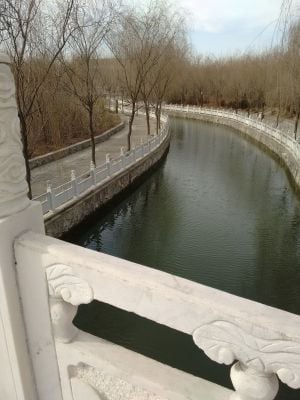
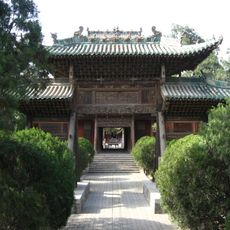
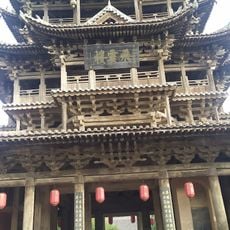
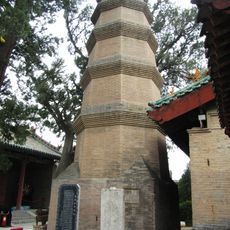
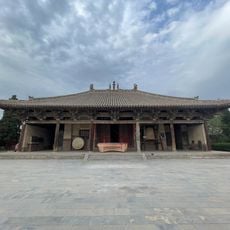
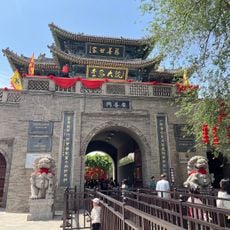
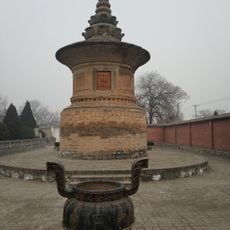
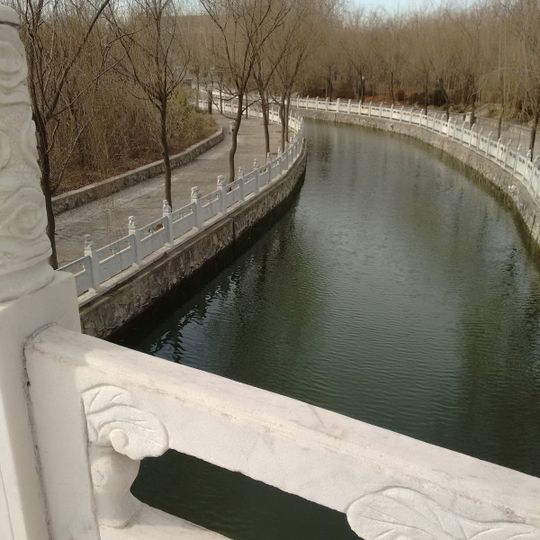
Shun Emperor Temple is a sacred complex in Yuncheng featuring multiple ceremonial halls, altars, and stone pathways arranged through maintained gardens. The layout demonstrates traditional Chinese architectural design with carefully organized spaces for rituals and worship.
According to Ming and Qing restoration steles in the temple, the complex was first built during the Tang Kaiyuan era (713–741). It was destroyed at the end of the Yuan dynasty, rebuilt under the Ming Wanli emperor and repaired several times in the Qing. It was damaged again during the Cultural Revolution and was listed as a National Key Cultural Relic in May 2006.
The temple is also called Mingshao Shun Mausoleum, and the whole site forms the Shun Emperor Mausoleum Scenic Area together with Shun Emperor Park and the Yanhu District Museum. The tomb mound, 2.9 metres high with a perimeter of 51 metres, bears a stone tablet reading "Tomb of Emperor Youyu Shun", written in 1611 by Xing Qiren, magistrate of Anyi County.
The site is accessible by local bus or taxi from Yuncheng city center and visitors should wear comfortable shoes due to the multiple pathways throughout the grounds. Tours are available during the day and visiting outside peak heat hours makes for a more pleasant experience.
The tomb mound is 2.9 m high with sides of 13.3 m and a perimeter of 51 m. In front of it stands a stone tablet reading "有虞帝舜陵", written in 1611 by Xing Qiren, magistrate of Anyi County. A smaller stone slab set into the mound bears the words "有虞氏陵".
The community of curious travelers
AroundUs brings together thousands of curated places, local tips, and hidden gems, enriched daily by 93,676 contributors worldwide.