宣化古城, Ancient fortified city in Hebei, China
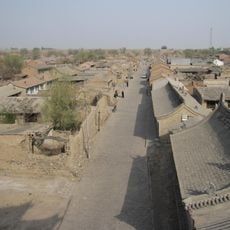
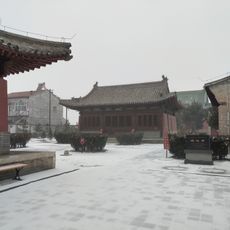
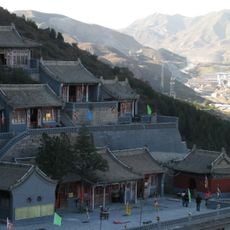
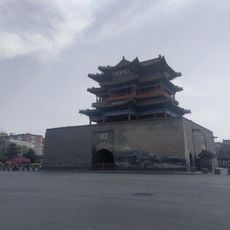
Xuanhua Ancient City is a Ming-era walled town in Hebei whose rammed-earth walls, faced with grey brick over a stone base, still run over 12,000 metres. Its three surviving towers stand on the north-south axis: Zhenshuolou (the drum tower, 1440), Qingyuanlou (the bell tower, 1482) and Gongjilou, the south gate tower rebuilt in 1734.
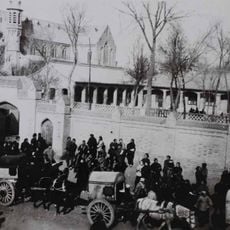
The city developed as a major military center during the Ming Dynasty, serving as the command post for the Xuanfu garrison, one of nine defense strongholds along the Great Wall border. This strategic role shaped its growth over centuries.
The city's name comes from the Ming-era Xuanfu garrison, and the old town was called "the first prefecture west of Beijing" after 康熙 made it a prefecture seat. The four gate names survive on the tower plaques: 昌平, 广灵, 安定 and 大新. The bell in 清远楼, cast in 1539, was struck to mark the hours for the garrison town.
It is best to arrive early to explore the towers and walls without crowds and to see the architectural details more clearly. The paths around the old city are flat and easy to walk, but offer little shade, so wear good shoes and bring sun protection.
The bronze bell inside Qingyuanlou was cast in 1539 by Guo Dengyong, a Ming censor; it measures 1.7 m across the rim, stands about 2.5 m tall and weighs over ten thousand jin. Look for the deep ruts, roughly 20 cm wide and deep, worn into the stone paving of the tower's cross-shaped passage by cart wheels.
The community of curious travelers
AroundUs brings together thousands of curated places, local tips, and hidden gems, enriched daily by 94,501 contributors worldwide.