Nihewan Basin, Archaeological site in Hebei, China
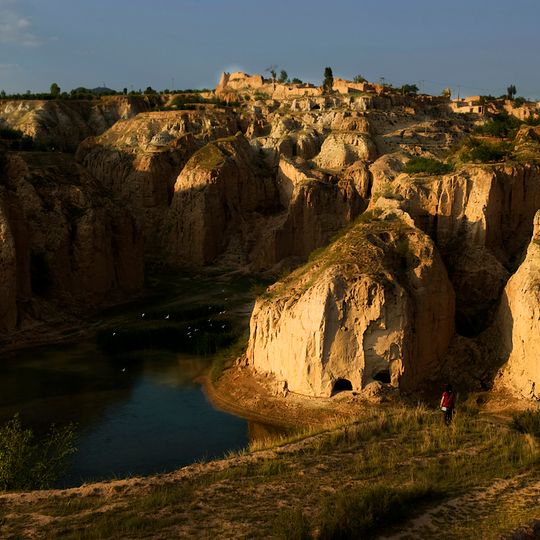
The Nihewan Basin is an archaeological site in Hebei containing multiple excavation areas where stone tools and ancient artifacts are found across different geological layers. These layers span a very long time period and show different phases of the earliest human settlement in East Asia.
A Scottish geologist discovered ancient lake deposits at the location in 1923, which led to archaeological investigations throughout the 20th century. These early discoveries established the site as an important location for understanding prehistoric human history.
The stone tools found across the basin show how early people in East Asia developed their techniques and adapted to their surroundings. These discoveries help reveal how daily life and survival methods developed over thousands of generations.
Visitors can explore different excavation sites by walking through the area and observing the various soil layers that indicate different periods of human history. Bringing a guidebook or visiting with a knowledgeable guide helps explain the significance of each location.
The site preserves evidence of human settlements from a time over a million years ago, making it among the oldest known locations of human activity in East Asia. This extreme depth of time makes it exceptionally valuable for understanding how early people developed and spread across the region.
The community of curious travelers
AroundUs brings together thousands of curated places, local tips, and hidden gems, enriched daily by 92,586 contributors worldwide.