慈云寺, Buddhist temple in Tianzhen County, Shanxi, China
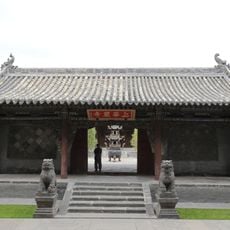
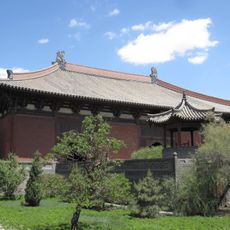
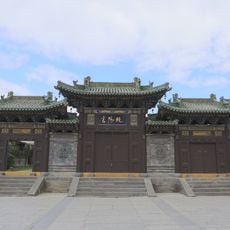
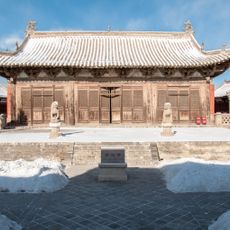
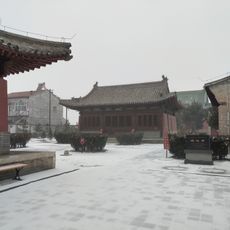
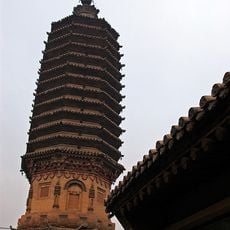
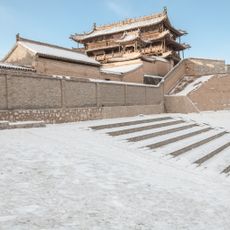
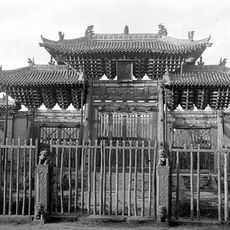
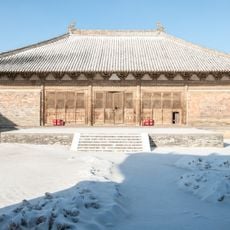
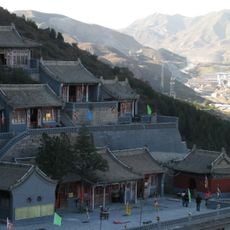
Ciyun Temple faces south on West Street in Tianzhen County, covering about 5,600 square metres. Its surviving buildings include the mountain gate, Vajra Hall, Mahavira Hall, Pilu Hall, bell and drum towers, Guanyin Hall, Dizang Hall, side wings and duodian. The Mahavira Hall has Ming-dynasty murals; the Pilu Hall, five bays wide with a nine-step bracket set, holds two Ming wooden wall-storage pavilions.
Ciyun Temple was first built in the Tang dynasty, after the Zhenyuan era (785–805) when the Tianchengjun city wall was raised; it was then called Fahua Temple. It was repaired in 1019, the eighth year of the Liao Kaiping era. A major renovation under the Ming Xuande era (1426–1435) brought the imperial name Ciyun Temple and the title "great monastery beyond the passes".
The name Ciyun Temple was granted by imperial order during the Xuande era (1426–1435) of the Ming dynasty, when the temple was also known as Guanwai Jucha, "the great monastery beyond the pass". Inside the Mahavira Hall are Ming dynasty murals, and the Pilu Hall holds two Ming wooden wall-storage pavilions.
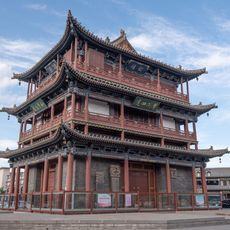
The temple faces south on West Street in Tianzhen county town, covering about 5,600 square metres, so allow time to walk the full axis from the mountain gate to the Pilu Hall. The bell tower stands to the right of the Mahavira Hall and the drum tower to its left, both with octagonal domed roofs on two levels.
The temple's bell tower stands to the right of the Mahavira Hall and the drum tower to its left, both with octagonal domed roofs in two tiers. The Pilu Hall, five bays wide with a nine-step bracket set, holds two Ming dynasty wooden sutra cabinets.
The community of curious travelers
AroundUs brings together thousands of curated places, local tips, and hidden gems, enriched daily by 93,971 contributors worldwide.