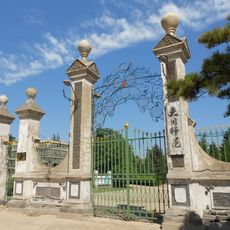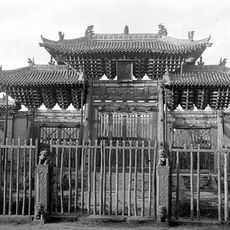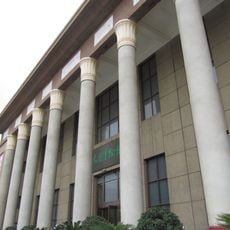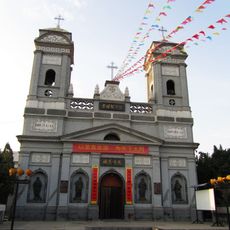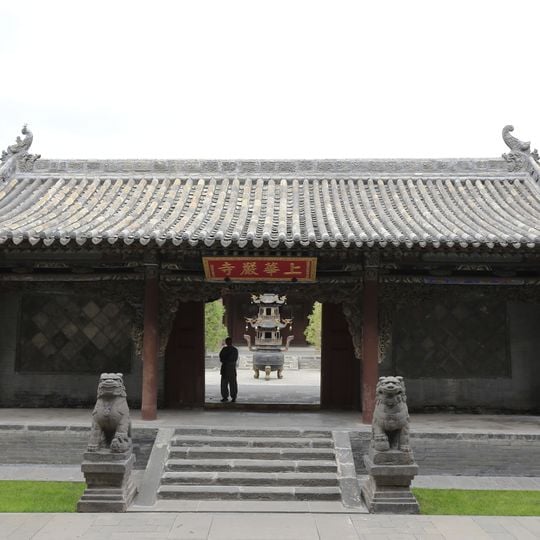
Huayan Temple, Buddhist temple in Datong, China.
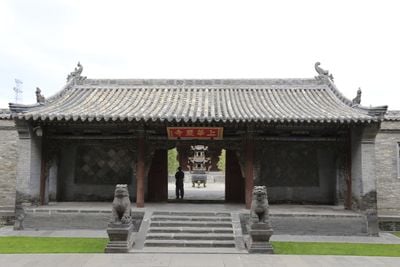
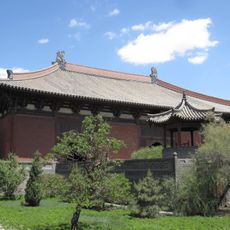
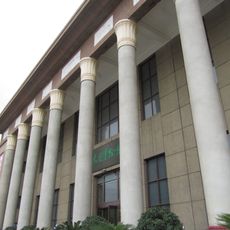
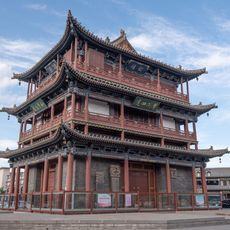
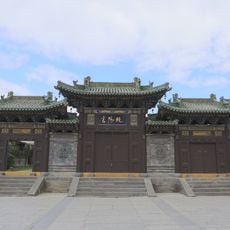
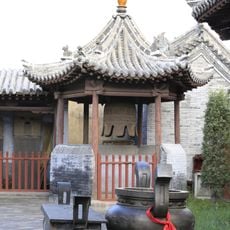
Huayan Temple is a Buddhist complex in Datong split into two sections: the upper part is an active monastery and the lower part functions as a museum open to the public. The compound holds several large halls from the Jin Dynasty, including one of the largest wooden main halls in China.
The temple was founded in 1038 under the Liao Dynasty and was badly damaged during a war not long after. It was rebuilt in 1140 under the Jin Dynasty, and the structures from that reconstruction are what visitors see today.
The temple's name comes from the Avatamsaka Sutra, known in Chinese as the Huayan Sutra. In the main hall, the three central Buddhas — Vairocana, Amitabha and Akshobhya — are carved from wood, while Ratnasambhava and Amoghasiddhi are clay; all five were made in the Xuande period (1426–1435) of the Ming. The murals on three walls, 887.25 square metres in all, were painted by craftsmen in the Guangxu period of the Qing.
The complex has two separate entrances for the upper and lower sections, so it helps to locate both when you first arrive. Comfortable shoes are a good idea since the paths between buildings can be long, especially on warmer days.
The underground palace beneath the 43.5-metre wooden pagoda, rebuilt in 2008, is lined with more than 100 tonnes of brass and was designed by Zhu Bingren and his son. The pagoda itself is China's second-tallest all-wood mortise-and-tenon tower, after the Yingxian Wooden Pagoda.
The community of curious travelers
AroundUs brings together thousands of curated places, local tips, and hidden gems, enriched daily by 93,085 contributors worldwide.