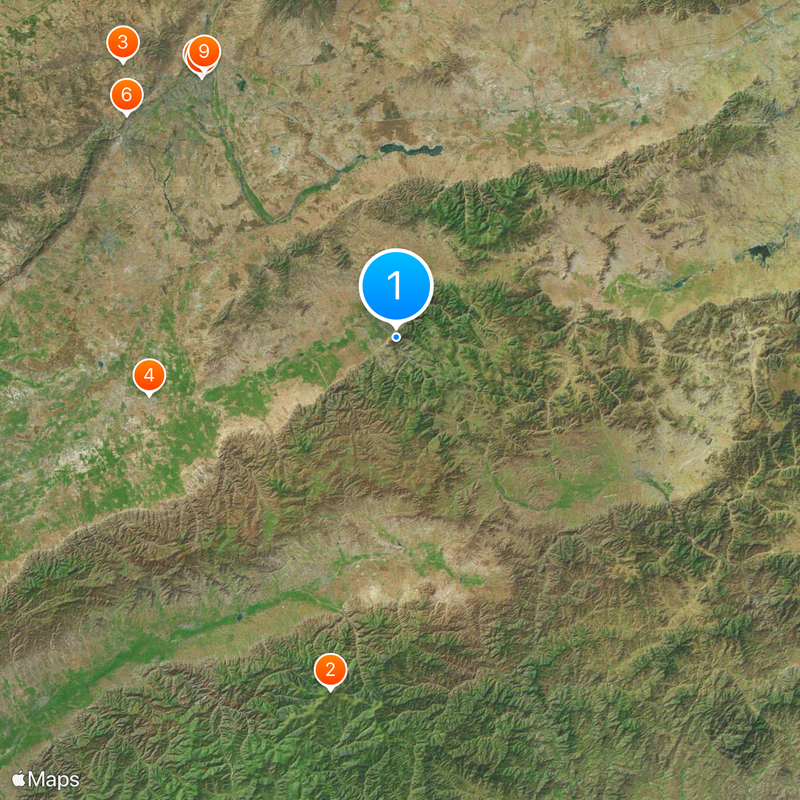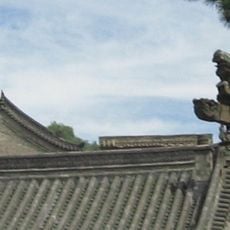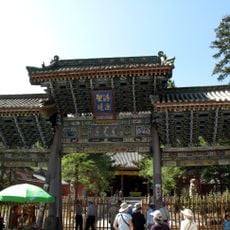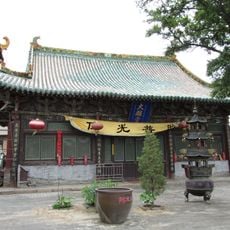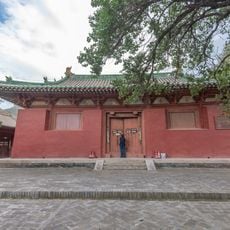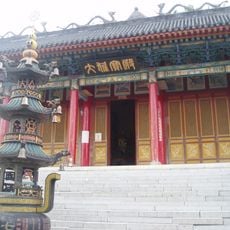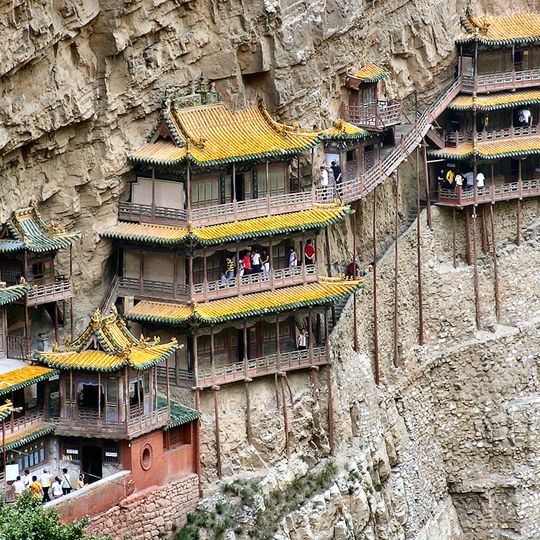
Hanging Temple, Buddhist and Taoist temple in Hunyuan County, China.
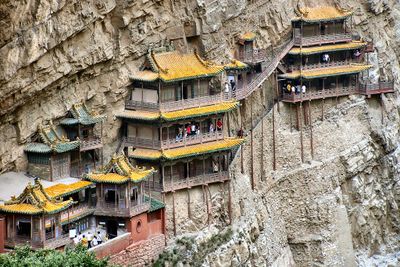
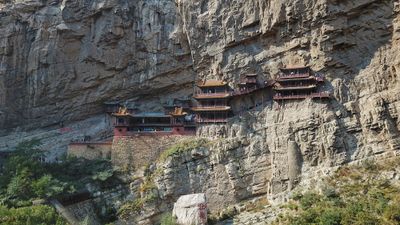
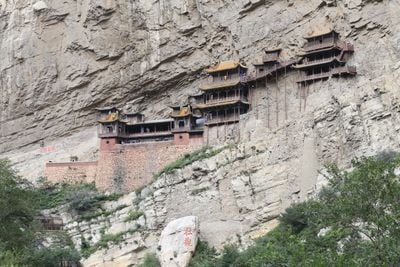
The structure rises on wooden beams inserted into the Mount Heng cliff face, standing 75 meters (246 feet) above the canyon floor. The construction consists of multiple pavilions and corridors connected by narrow walkways and bridges, hugging the natural contours of the rock formation.
Monk Liao Ran initiated construction in 491 during the Northern Wei Dynasty on this mountainside location. Subsequent dynasties expanded the original structure through additional halls and renovations, particularly during the Ming and Qing periods, creating the architectural ensemble visible today.
The complex contains 78 statues crafted from bronze, clay, and stone representing deities from Buddhism, Taoism, and Confucianism across 40 interconnected halls. This religious amalgamation makes the site a rare example of spiritual coexistence in Chinese architecture, where practitioners of different faiths shared sacred space.
Access involves walking through narrow passages and bridges, with stability maintained by an engineering system of crossbeams and supporting pillars. Spring and autumn offer the most favorable visiting conditions with comfortable temperatures and clear views of the surrounding mountains.
The cliff positioning protected the complex from flooding by the nearby river and effects of direct sunlight exposure. The architectural design incorporates natural rock formations as structural elements, with some pillars serving more decorative than load-bearing functions in the overall support system.
The community of curious travelers
AroundUs brings together thousands of curated places, local tips, and hidden gems, enriched daily by 60,000 contributors worldwide.