Mount Wutai, Sacred Buddhist mountain in Xinzhou, China.
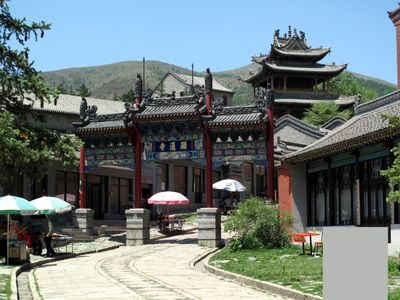
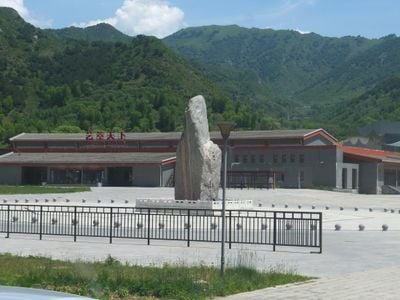
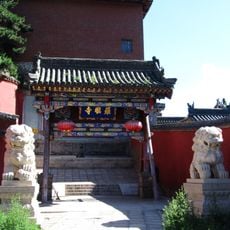
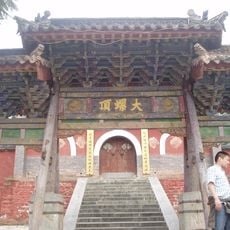
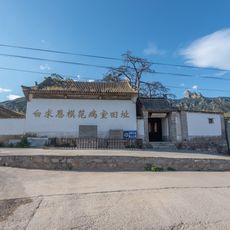
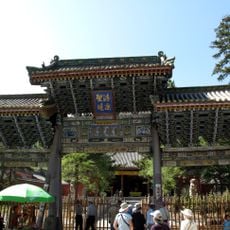
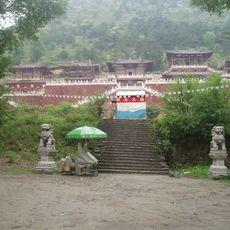
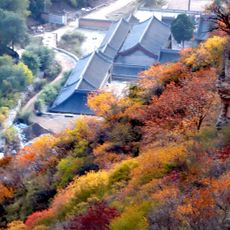
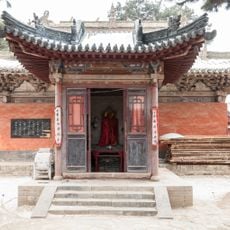
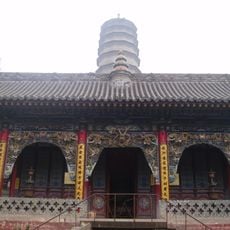
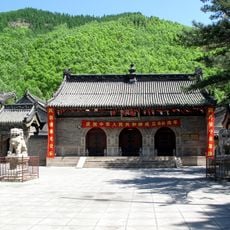
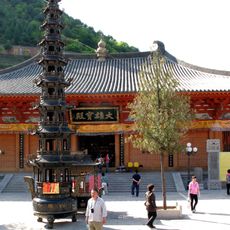
Mount Wutai is a cluster of five flat-topped peaks—Wanghai, Jinxiu, Cuiyan, Guayue and Yedou—arranged around a central basin in Shanxi. The North Peak, Yedou Feng, rises to 3,061 m, the highest point in North China. The scenic area covers 2,837 km² and holds 47 surviving monasteries, 39 inside the peaks and 8 outside. At Xiantong Temple, a four-column wooden gateway carries a blue plaque with three gold characters, 顯通寺.
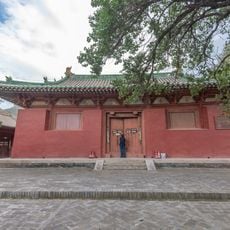
Mount Wutai's association with Mañjuśrī is documented in the Avataṃsaka Sūtra, and pilgrims from India were arriving by the seventh century. The Tang-era main hall of Nanchan Temple (782) and East Hall of Foguang Temple (857) survive as some of China's oldest wooden buildings, rediscovered in 1937–38 by Liang Sicheng's team. The site was inscribed as a UNESCO World Heritage Site in 2009.
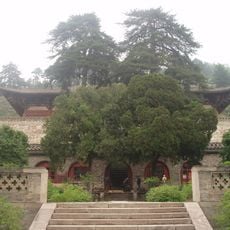
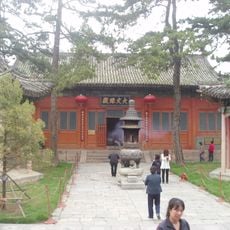
Mount Wutai is the bodhimaṇḍa of Mañjuśrī, the bodhisattva of wisdom, not a Buddha; pilgrims have come from India and other Asian countries since at least the 7th century. Devotees hold that Mañjuśrī appears here as ordinary pilgrims, monks or five-coloured clouds. It is China's only site where Han Buddhist green temples and Tibetan Buddhist yellow temples stand together, and the Yellow Sect assembly at Pusading runs from the 4th to the 15th of the sixth lunar month.
Visitors can reach the site by bus or air and should prepare for changing weather conditions since the elevation leads to rapid temperature shifts. Sturdy footwear and protective clothing are important for your time on the mountain terrain.
The site is known for housing some of China's oldest surviving wooden structures, including the Nanchan Temple dating from the Tang Dynasty period. These rare architectural examples allow visitors to witness ancient building methods and craftsmanship from that era.
The community of curious travelers
AroundUs brings together thousands of curated places, local tips, and hidden gems, enriched daily by 93,082 contributors worldwide.