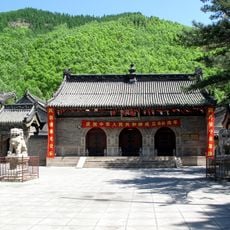
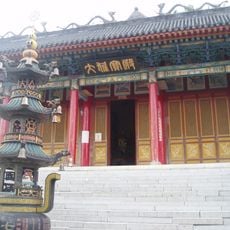
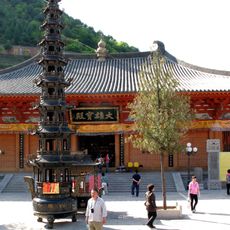
Great White Pagoda, Buddhist temple in Mount Wutai, China
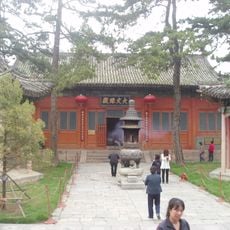
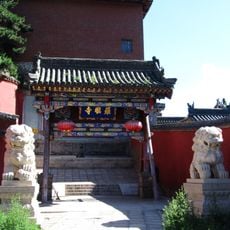
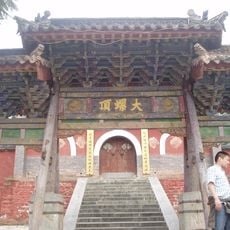
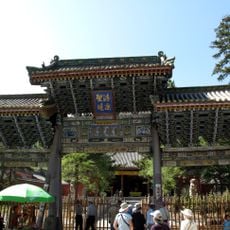
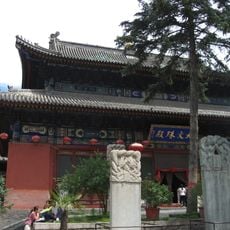
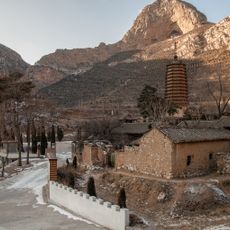
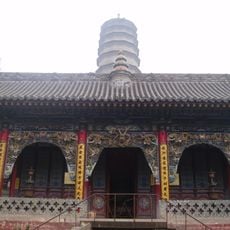
The Great White Pagoda is a Buddhist temple complex in Shanxi, China, built around a central stupa that gives the site its name. The white tower, coated in lime and rising in layered tiers, stands at the center of several halls and buildings arranged around it.
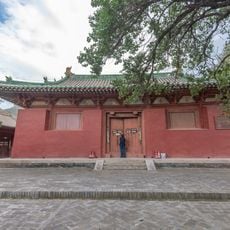
The Great White Pagoda was built in 1302 under the Yuan dynasty, designed by the Nepalese architect Araniko, who enclosed an earlier Tang-dynasty stupa within it. In 1407 the Ming emperor Yongle ordered its restoration, and in 1589 the Wanli emperor granted the name Tayuan Temple, making it independent from Xiantong Temple. The Daci Yanshou Hall was added in 1578 for the Wanli emperor's mother, Empress Li.
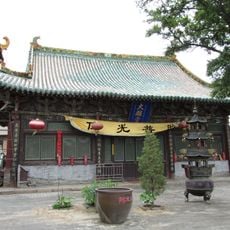
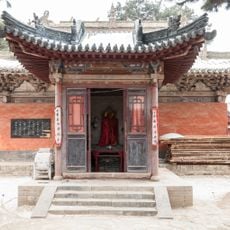
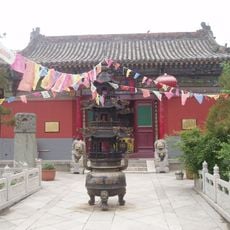
The pagoda stands at the center of an active pilgrimage route and draws followers of Tibetan Buddhism from across China. Visitors can see prayer wheels, incense burners, and small offerings that show the site is still in regular religious use today.
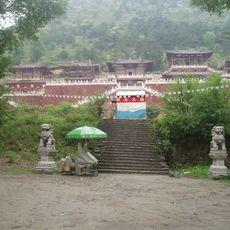
The grounds cover more area than they first seem, with stairs and uneven paths connecting different sections at varying heights. Comfortable shoes and modest clothing are both worth keeping in mind, as the site is an active place of worship.
The Great White Pagoda was designed in 1302 by the Nepalese craftsman Araniko, and an older stupa, Cishou Pagoda, was enclosed inside its body. The 75.3-metre brick tower is coated in lime, and its spire, trays and pearls are bronze. In April 1948 Mao Zedong and Zhou Enlai spent a night at the temple; a tale that a monk gave Mao the number 8341 later named the Central Guard Regiment.
The community of curious travelers
AroundUs brings together thousands of curated places, local tips, and hidden gems, enriched daily by 93,882 contributors worldwide.