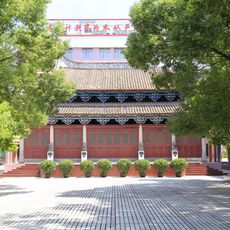
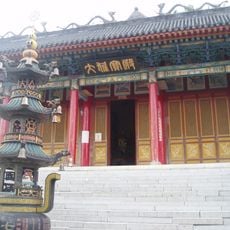
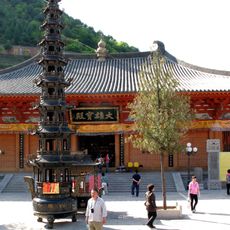
Zunsheng Temple, Buddhist temple in Wutai County, China
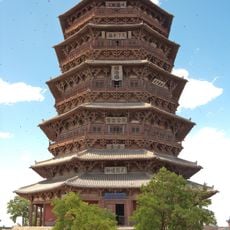
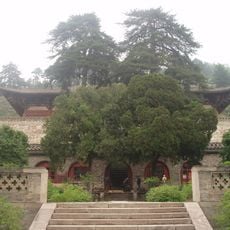
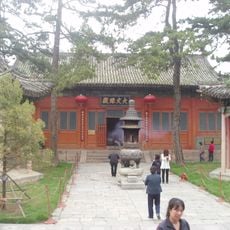
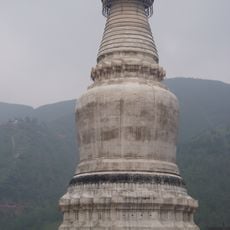
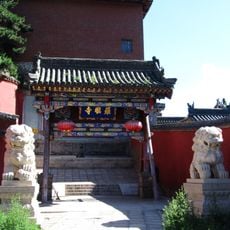
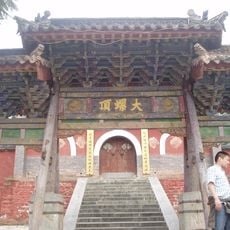
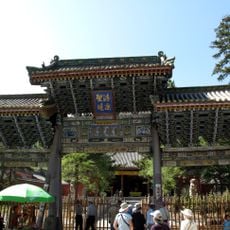
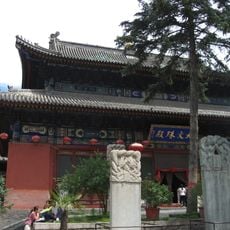
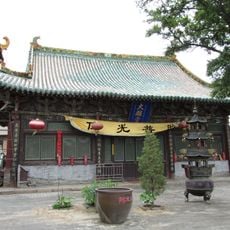
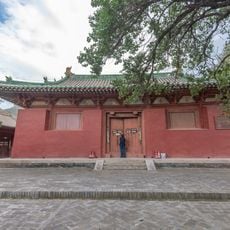
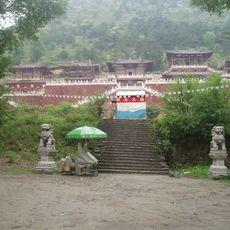
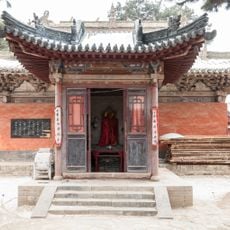
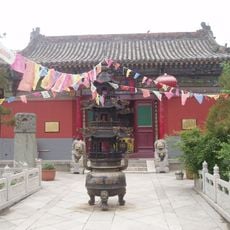
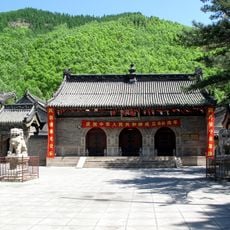
Zunsheng Temple is built against a hillside, rising gradually from south to north across seven successive courtyards. The halls follow one another in order: Tianwang Hall, Mahavira Hall, the Hall of the Buddhas of the Three Times, the sutra library, the Three Sovereigns and Three Sages Cave, the Five Manjushri Hall, and finally the Wanzang Pagoda at the northern end. In the eastern side courtyard stand two stone sutra pillars, one carved in 1026 and the other a Republican-era copy of Song style.
The temple originated during the Tang dynasty under a different name and later received its current name after various changes and reconstructions. Significant rebuilding happened across several later dynasties that shaped the structures visitors see today.
The temple's name comes from the Usnisa Vijaya Dharani Sutra. It was long known as the 'throat of the five peaks' because pilgrims walking to Mount Wutai passed through here. Two stone sutra pillars stand in the east side courtyard: one made in 1026 during the Northern Song, the other a Republic-era copy of Song style.
The temple is set on sloping terrain with steps and pathways connecting different elevation levels throughout the grounds. Visitors should allow plenty of time to move between the various sections and explore the different areas at a comfortable pace.
The temple's name comes from the Usnisa Vijaya Dharani Sutra. In 676, the Indian monk Buddhapala is said to have met Manjushri at the site, then called Cuiyan Mountain Monastery; he returned in 683 with the sutra, and the Tang court expanded the monastery the next year. Two stone sutra pillars stand in the east side courtyard: one dated to 1026, the other a Republic-era copy of Song style.
The community of curious travelers
AroundUs brings together thousands of curated places, local tips, and hidden gems, enriched daily by 93,797 contributors worldwide.