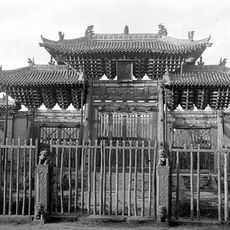
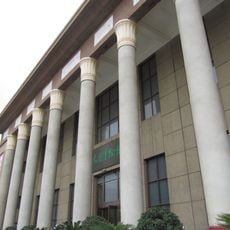
Tomb of Li Yumei, Tomb in Hunyuan County, Shanxi, China
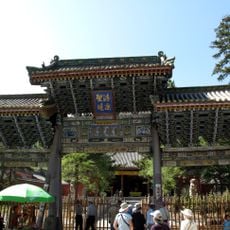
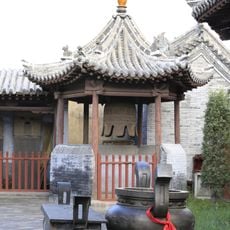
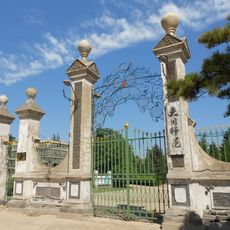
The Tomb of Li Yumei, known locally as the Li family grave, lies northeast of Hunyuan County seat in Shanxi. It faces south, and from south to north a brick arched gate leads to a white marble memorial archway with huabiao columns, then a spirit path lined with stone figures, and finally the burial mound. A stele pavilion stands beside the archway.
Li Yumei was a Qing dynasty official whose tomb, known locally as the Li family grave, was built in the northeast of Hunyuan County. It was listed as a Shanxi provincial cultural relic in 1965 and among the sixth batch of Major Historical and Cultural Sites Protected at the National Level in 2006.
The tomb is known locally as the Li family grave (Li Jiafen). Its memorial archway is flanked by a stele pavilion whose inscription was written by Lin Zexu, the Qing official remembered for opposing the opium trade. The sequence of gate, archway, spirit way and burial mound follows Qing funerary custom.
The tomb lies northeast of Hunyuan County seat in Shanxi, reached by road from the town. Entering from the south, visitors pass the brick-vaulted gate, then the white marble memorial archway with its huabiao columns, before the tomb path lined with stone figures and the burial mound. The stele pavilion beside the archway holds a text by Lin Zexu.
The stele pavilion beside the memorial arch holds an inscription written by Lin Zexu, the Qing official known for destroying opium at Humen in 1839. Li Yumei, a Qing dynasty minister, is buried here; the tomb is also known locally as the Li family grave.
The community of curious travelers
AroundUs brings together thousands of curated places, local tips, and hidden gems, enriched daily by 93,873 contributors worldwide.