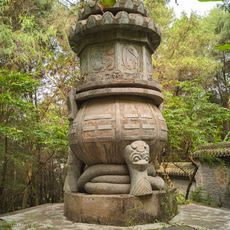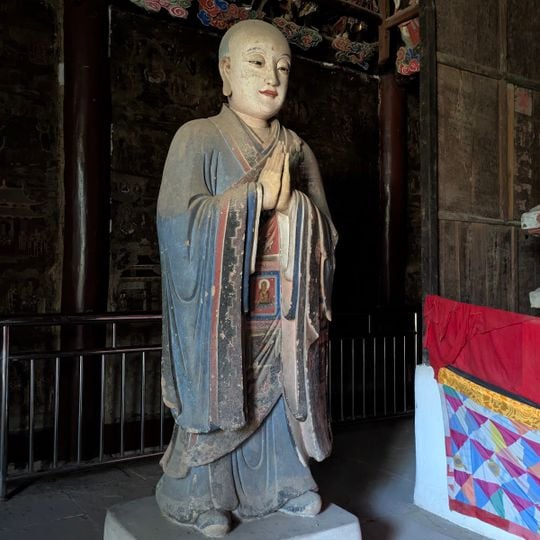
Jueyuan Temple, Buddhist temple in Sichuan, China.
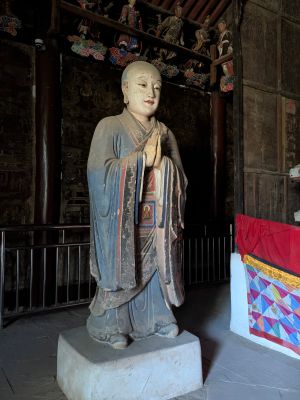
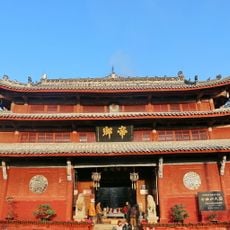
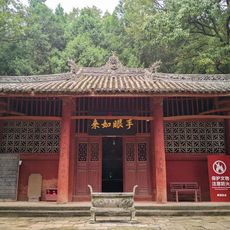
Jueyuan Temple is a Buddhist sanctuary in Sichuan featuring multiple structures built in traditional Chinese style. The complex contains several halls with Buddha statues, altars, and chambers designed for religious ceremonies and practices.
Founded in the Tang Zhenguan era as Hongji Temple, it was renamed Jueyuan during the Northern Song Yuanfeng era. Rebuilt in 1457 as Puji Temple, it was repaired around 1662 and took back the name Jueyuan. It was listed as a Sichuan provincial heritage site in 1956 and a National Key Cultural Relic in 2001.
The name Jueyuan was bestowed during the Northern Song Yuanfeng era; the temple was first called Hongji in the Tang and later Puji after its 1457 Ming rebuilding. Its most notable feature is the Ming-era mural cycle in the Mahavira Hall, covering 139.79 square metres of wall and 33.79 square metres behind the altar, depicting scenes from Shakyamuni's life.
The temple faces south and covers 3,200 square metres, with the sutra library (Heavenly King Hall), the Mahavira Hall and the Guanyin Hall standing one behind the other on a single north–south axis. Enter from the west side of Wulian town and walk the axis in order; the Ming murals are inside the Mahavira Hall, on the walls and behind the Buddha altar.
The wall paintings cover 139.79 m² inside the Great Buddha Hall, plus 33.79 m² on the rear wall of the Buddha altar — all Ming-dynasty work depicting scenes from Shakyamuni's life. The temple was first built in the Tang Zhenguan era as Hongji Temple, was granted the name Jueyuan in the Northern Song Yuanfeng era, and was rebuilt in 1457.
The community of curious travelers
AroundUs brings together thousands of curated places, local tips, and hidden gems, enriched daily by 93,413 contributors worldwide.